


Copyright Implications For AI-Generated Interactive Design Films
📌 I. Core Copyright Issues in AI‑Generated Films
1. Authorship & Ownership
Traditional copyright law only recognizes human authorship. Works must contain original creative expression by a natural person. Pure AI output with no meaningful human input is generally not eligible for copyright protection.
In many countries (including India, U.S., EU), an AI itself cannot hold copyright because it lacks legal personality. Only humans or legal entities (e.g., corporations) can be rights holders.
2. AI Training Data & Infringement
Generative AIs are trained on massive data sets drawn from existing copyrighted works. If the training includes copyrighted material without permission, output that replicates or reproduces that content may infringe copyright.
3. Derivative Works
If an AI film reproduces key elements of existing works (characters, music, plot, visuals), it may be considered a derivative work requiring licensing from the original copyright holder.
4. Interactive Films
Interactive design films raise additional questions: Is interactivity itself — like branching narrative paths — original human expression? Could prompts and structural choices by filmmakers count as creative input? The answer depends on jurisdiction and case‑by‑case assessment.
5. Personality Rights & Deepfakes
Even if not strictly copyright, AI film creators may face personality rights, privacy, or unfair competition claims when using a person’s likeness or voice without consent. (E.g., deepfakes) — discussed below.
📌 II. Key Cases & Legal Decisions (Detailed)
Below are six cases that collectively demonstrate how courts are addressing these issues:
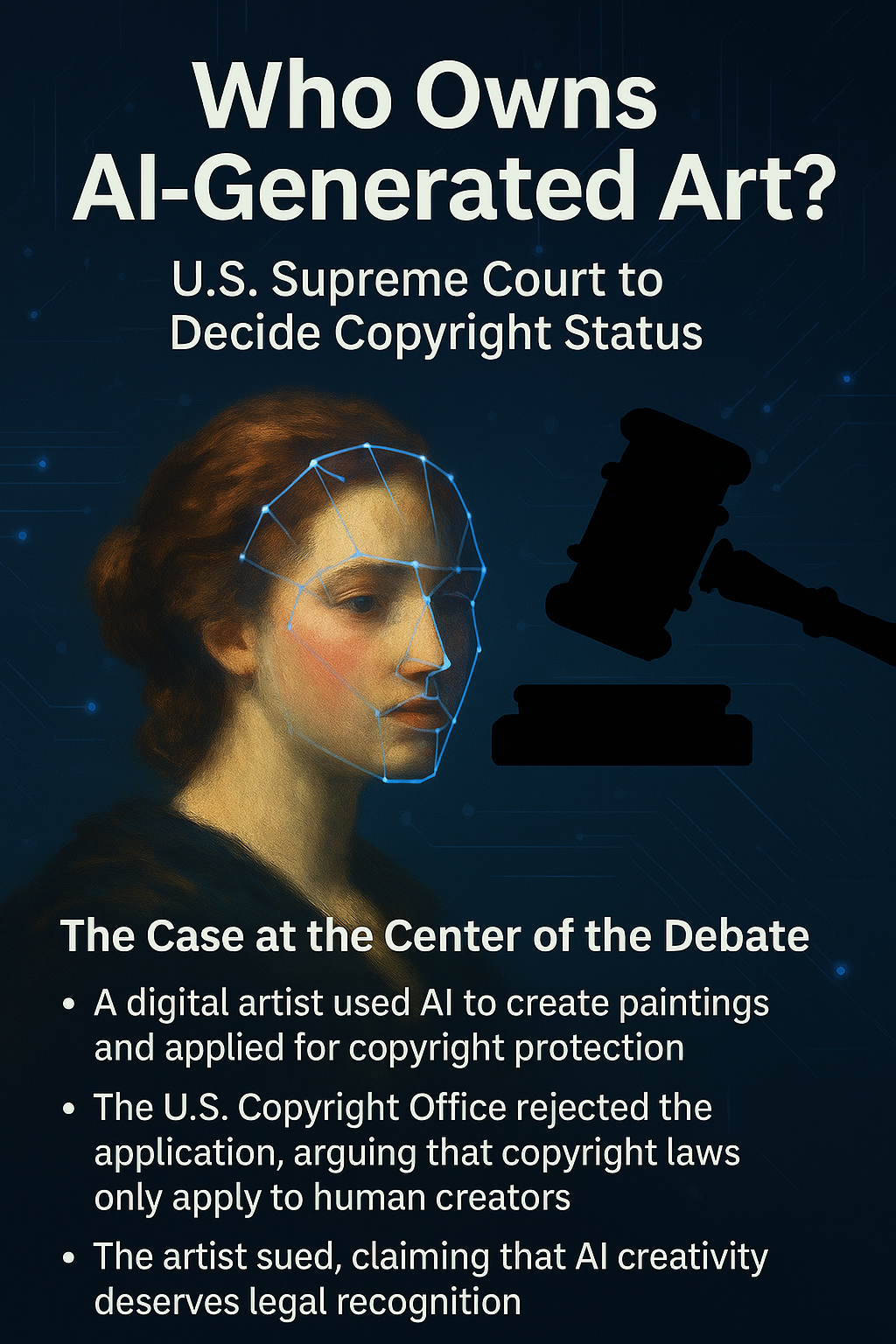
1. Thaler v. U.S. Copyright Office — AI Works Must Have Human Authors
Jurisdiction: United States
Summary: Dr. Stephen Thaler attempted to register copyright for an artwork generated by his AI (“Creativity Machine”). The U.S. Copyright Office denied the claim on the basis that only works created by humans are eligible for copyright. The denial was upheld in federal appellate review.
Why It Matters for AI Films
This confirms that pure AI generation — where a machine autonomously generates creative content — *cannot be protected *under current copyright law.
For interactive films, this means that AI output alone is not enough; there must be significant human creative direction to qualify.
Key Legal Point
Human involvement — not just pressing “generate” — must be meaningful and creative.
2. Zarya of the Dawn — Partial Copyright Rejection
Jurisdiction: United States (U.S. Copyright Office)
Facts: A comic book fully illustrated by Midjourney AI was initially granted copyright. Later, once the AI origin was known, the office revoked copyright for the images, holding that those parts lacked human authorship.
Outcome
Text was still protected (human authored).
AI‑generated imagery was not protected.
Implication
Demonstrates that works containing both AI and human content may be partially protectable depending on authorship.
3. GEMA v. OpenAI — Copyright Infringement by AI Training
Jurisdiction: Germany
Facts: German court ruled that training generative AI on copyrighted songs without permission — and then reproducing the lyrics — violates copyright.
Legal Importance
AI operators themselves can be liable if they use copyrighted works without consent.
If an AI film reconstructs protected material from training data, that output could be infringing.
Relevance to Interactive AI Films
Even if an AI generates original visuals, if underlying training involves copyrighted movies or songs, rights holders could bring infringement suits.
4. Stability AI / Midjourney Artists Lawsuit — Training & Derivative Claims
Jurisdiction: U.S. Federal Court (Northern District of California)
Summary: Visual artists alleged that AI image tools used their works without permission to train models, then produced images “in the style of” plaintiffs’ works — potentially infringing derivative rights.
Legal Issue
The lawsuit attacks unlicensed use of original art as training material, and claims reconstructed outputs are harmful derivatives.
Takeaway
Even if a film does not directly copy a work, style imitation may lead to derivative claims.
5. MiniMax v. Hollywood Studios — AI Facilitating Infringement
Jurisdiction: U.S. District Court (California)
Summary: Major studios (Disney, Universal, Warner Bros.) sued Chinese company MiniMax, alleging its Hailuo AI service used copyrighted characters (e.g., Darth Vader) without authorization and allowed users to generate infringing content.
Importance
Focuses on AI platform liability — not just the final output, but the availability of tools that generate copyrighted material.
Implication for Films
Tools that enable users to generate AI films containing protected IP may be subject to injunctions.
6. Personal Rights & Deepfakes – Indian Courts (Bombay & Delhi HC)
Jurisdictions: Bombay High Court & Delhi High Court, India
Facts: Courts granted injunctions against misuse of AI for unauthorized endorsements and deepfake films portraying real people without consent.
Key Legal Points
Even if copyright law doesn’t protect a work, personality rights can block dissemination.
AI‑produced film of a person’s likeness can violate privacy and publicity rights.
Relevance
AI interactive films using real people must consider multiple legal regimes, not just copyright.
📌 III. Broader Implications for AI Interactive Design Films
1. Copyright Protection Is Uncertain
Purely AI‑generated films are unlikely to receive traditional copyright protection under most current laws.
Films can only be protected if a human creator exercised creative judgment that rises to authorship.
2. Rights Clearance Matters
If your AI film incorporates or resembles existing copyrighted material (visuals, music, story elements), you may face infringement liability.
3. Tool Providers May Be Liable
Companies offering AI film generators can be sued if their training methods or capabilities lead to unlicensed use of copyrighted material.
4. Personality & Other Rights Can Override Copyright
Deepfake or persona misuse claims can block release even if copyright isn’t directly implicated.
5. Interactive Elements Increase Complexity
In interactive design films, decisions by users (branching story, character design) must be significant enough to count as creative input to qualify for copyright.
🧠 Summary: What These Cases Teach Us
| Case Theme | Key Legal Principle |
|---|---|
| Thaler / Zarya | Only human creative authors can get copyright protection. |
| GEMA v. OpenAI | AI systems can infringe copyright via training/reproduction. |
| Artists vs AI Platforms | Using artists’ works without permission for training may be infringement. |
| MiniMax / Studios | AI tools that generate copyrighted content can face liability. |
| Deepfake Personal Rights Cases | Independent of copyright, personality/ privacy rights offer protection. |
📌 Practical Takeaways for Filmmakers & Designers
✔ Ensure clear human authorship — create and document your creative decisions.
✔ Avoid unlicensed use of third‑party material in training or output.
✔ Get permission/clearance for any copyrighted property featured.
✔ Consider personality rights if using familiar faces/voices.
✔ Legal framework is evolving — stay updated on new case law and statutory changes.
RELATED Blog





comments