



Supreme Court Rulings On Rehabilitation And Recidivism Reduction
1. Bachan Singh v. State of Punjab (1980)
Citation: AIR 1980 SC 898
Facts: This case primarily dealt with the death penalty, but it had significant discussions on the philosophy of punishment. The Court emphasized that punishment should aim not only at retribution but also at reform and social reintegration of the offender wherever possible.
Supreme Court Observations:
The Court highlighted that life imprisonment can serve as an alternative to the death penalty with a rehabilitative approach.
Emphasized that the criminal justice system must consider social, psychological, and moral rehabilitation.
Impact on Rehabilitation & Recidivism:
Encouraged correctional measures that focus on behavioral change rather than purely punitive measures.
Established the principle that sentencing should balance deterrence and rehabilitative potential.
2. Sheela Barse v. Union of India (1986)
Citation: AIR 1986 SC 1773
Facts: Public Interest Litigation (PIL) filed regarding the inhumane conditions of prisoners in Indian jails and lack of rehabilitation facilities.
Supreme Court Observations:
Prisoners are entitled to basic human rights, education, vocational training, and opportunities for reintegration.
Highlighted the need for correctional institutions to focus on rehabilitation and reducing the chances of reoffending.
Impact on Rehabilitation & Recidivism:
Led to reforms in prison administration emphasizing skill-building, literacy, and psychological counseling.
Recognized rehabilitation as a constitutional obligation under Article 21 (Right to Life and Dignity).
3. State of Maharashtra v. S. S. Shinde (2001)
Citation: 2001 Cri LJ 1631 (SC)
Facts: Case concerned the effectiveness of rehabilitation programs for offenders and measures to prevent repeated offenses.
Supreme Court Observations:
Court stressed the need for “aftercare” programs post-release to prevent recidivism.
Suggested integrating employment opportunities, social support, and counseling to reintegrate offenders.
Impact:
Strengthened the judiciary’s view that rehabilitation is a continuous process, extending beyond prison life.
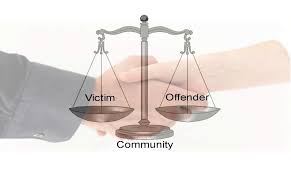
Highlighted the importance of community-based corrections to reduce repeat offenses.
4. Prem Shankar Shukla v. Delhi Administration (1980)
Citation: AIR 1980 SC 1535
Facts: Addressed disciplinary procedures in correctional institutions and the treatment of juveniles.
Supreme Court Observations:
Juveniles and young offenders should be treated in a way that emphasizes reform over punishment.
Recommended education, vocational training, and structured rehabilitation to prevent future criminal behavior.
Impact on Recidivism Reduction:
This case reinforced the principle of “reformative justice” in juvenile cases.
Juvenile justice laws later codified many of these recommendations (Juvenile Justice Act, 2015).
5. Sunil Batra v. Delhi Administration (1978 & 1980)
Citation: AIR 1978 SC 1675; AIR 1980 SC 1579
Facts: PIL concerning custodial violence, inhumane treatment, and prisoners’ rights.
Supreme Court Observations:
Highlighted that correctional facilities should aim at reforming prisoners, not merely punishing them.
Emphasized rehabilitation programs like education, skill development, and moral guidance.
Introduced the principle that prisoners’ dignity and human rights must be respected to prevent social alienation and recidivism.
Impact:
Led to reforms in prison administration and focus on rehabilitation programs.
Recognized that humane treatment inside prison reduces the risk of reoffending.
Key Takeaways Across Cases
Rehabilitation is recognized as a constitutional and social responsibility, not merely optional.
Recidivism reduction requires a mix of custodial reform, skill training, education, psychological counseling, and post-release support.
Juvenile and first-time offenders are especially prioritized for reformative measures.
Courts consistently underline the balance between public safety and reintegration of offenders into society.
RELATED Blog







comments