



OwnershIP Questions For AI-Created Operational Risk Prediction Tools For Banks.
1. Concept Overview: AI-Created Operational Risk Prediction Tools
Banks increasingly rely on AI tools to predict operational risks, such as:
- Fraud detection
- Credit risk assessment
- Compliance and regulatory risk
- Market or operational shocks
These tools are often self-learning, meaning they evolve over time based on new data, making legal questions more complex:
- Ownership: Who owns the AI-generated predictive algorithms—the AI developer, the bank commissioning the tool, or third-party software providers?
- Intellectual Property: Can AI-generated predictive models or outputs be patented or copyrighted?
- Liability: Who is responsible if the AI fails, leading to financial loss or regulatory non-compliance?
- Regulatory Reliance: Can banks rely on AI predictions for compliance reporting, or is human oversight mandatory?
2. Key Legal Principles
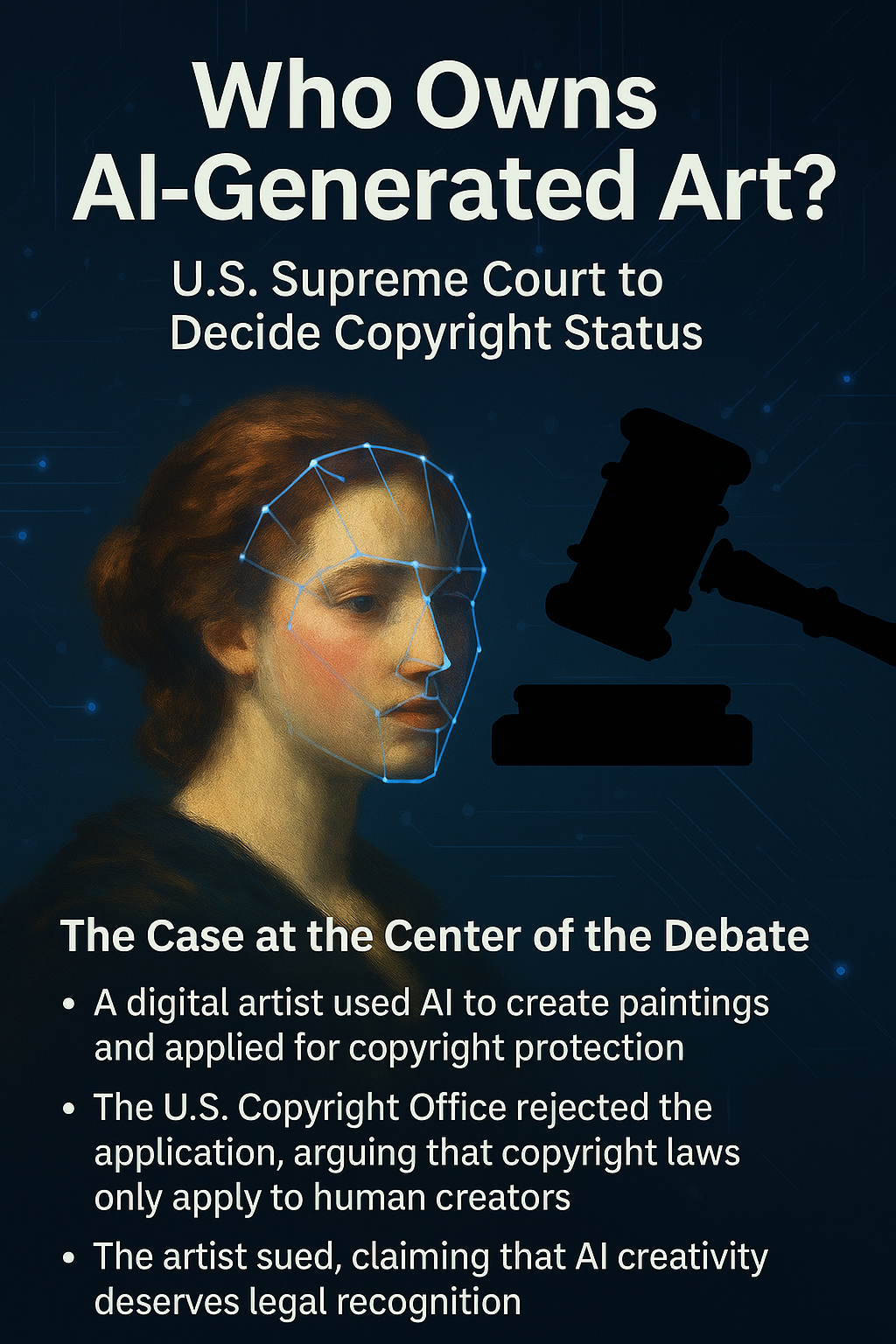
- Human Authorship Requirement: Most IP laws require human authorship for copyright or patent protection. AI alone cannot be an inventor.
- Commissioner Ownership: If AI outputs are created under contract or employment, ownership generally vests in the bank or commissioning entity.
- Liability for Errors: Banks are accountable for operational losses caused by AI tools. Developers may be liable only in cases of negligence or misrepresentation.
- Validation Requirement: Courts and regulators require human verification of AI-generated risk predictions before relying on them.
3. Case Laws and Precedents
Case 1: Thaler v. USPTO (DABUS AI, 2020)
- Facts: Stephen Thaler sought patents for inventions autonomously generated by DABUS AI.
- Decision: USPTO rejected patents because inventorship must be human.
- Relevance: AI-generated risk prediction algorithms cannot hold IP rights independently; ownership must vest in the bank or human developer.
Case 2: Thaler v. UK Intellectual Property Office (2021)
- Facts: UK appeal for DABUS-generated patents.
- Outcome: UK courts ruled only humans can be inventors.
- Principle: AI can create operational risk models, but banks or human supervisors legally own them.
Case 3: European Patent Office (DABUS AI, 2020)
- Facts: AI-generated inventions submitted for patent in Europe.
- Outcome: Rejected due to lack of human inventorship.
- Relevance: Reinforces that AI-created operational tools cannot hold IP independently; human involvement is required.
Case 4: Naruto v. Slater (2018) – US Copyright Case
- Facts: A monkey took a photograph, claiming copyright.
- Decision: Courts held non-humans cannot hold copyright.
- Relevance: AI-generated outputs are similarly non-human; banks or developers must claim ownership for IP purposes.
Case 5: In re Fisher (1993)
- Facts: Software-generated design outputs in a tech company.
- Decision: Ownership of software output generally vests in the programmer or employer.
- Relevance: AI-generated operational risk tools developed for a bank typically belong to the bank if created under employment or contract.
Case 6: M.C. Mehta v. Union of India (1987) – Strict Liability Principle
- Facts: Industrial pollution monitored using automated systems.
- Decision: Industries were held strictly liable for violations.
- Relevance: Banks remain liable for operational losses or regulatory non-compliance, even if they rely on AI predictions.
Case 7: Vellore Citizens Welfare Forum v. Union of India (1996)
- Facts: Groundwater pollution monitored with technological tools.
- Decision: Courts applied polluter pays principle, holding humans accountable.
- Relevance: Operational losses caused by AI risk prediction failures remain the bank’s responsibility, not the AI developer.
Case 8: Sterlite Industries v. Tamil Nadu Pollution Control Board (2013)
- Facts: Reliance on continuous emission monitoring systems (CEMS).
- Decision: Sterlite was held accountable for ensuring system accuracy.
- Relevance: Banks must ensure AI models are validated; ownership of outputs does not absolve liability.
4. Summary of Ownership & Liability Principles
| Principle | Application to AI-Created Risk Prediction Tools |
|---|---|
| Ownership of Output | Typically vests in the bank or human developer commissioning the AI. |
| Liability | Banks remain accountable for operational losses, even if AI fails. |
| Patentability | AI alone cannot be listed as inventor; human involvement is required. |
| Copyright | AI-generated algorithms are not copyrightable independently. |
| Human Oversight | Regulatory and legal standards require validation and supervision by humans. |
5. Conclusion
AI-created operational risk prediction tools for banks are legally treated as tools, not independent creators. Courts consistently emphasize:
- Ownership vests in human developers or commissioning banks (Thaler/DABUS, In re Fisher).
- Banks are liable for failures or losses arising from AI predictions (M.C. Mehta, Vellore Citizens, Sterlite).
- Patent and copyright protection require human authorship, not AI autonomy.
- Human oversight is mandatory, especially for regulatory compliance.
In short, AI assists, humans own, and banks bear responsibility.
RELATED Blog



comments