



OwnershIP Problems In AI-Generated Workforce Automation Blueprints.
1. Conceptual Background
AI-generated workforce automation blueprints are designs or schematics for automating tasks in a workplace, created entirely or partially by AI systems. Ownership questions arise because these designs involve intellectual property (IP) law, labor law, and contract law:
Key issues:
- Who owns AI-generated blueprints?
- AI itself? Programmer? Employer? User?
- Copyrightability:
- Does AI-generated design meet originality and authorship requirements?
- Patentability:
- Are AI-generated methods or systems patentable?
- Trade secrets & confidential information:
- Can organizations claim proprietary rights even if the AI did the work?
Legal principles often hinge on:
- Human authorship in copyright law.
- Human inventorship in patent law.
- Contractual assignments and work-for-hire rules.
2. Legal Principles Relevant to AI-Generated Workforce Blueprints
- Copyright:
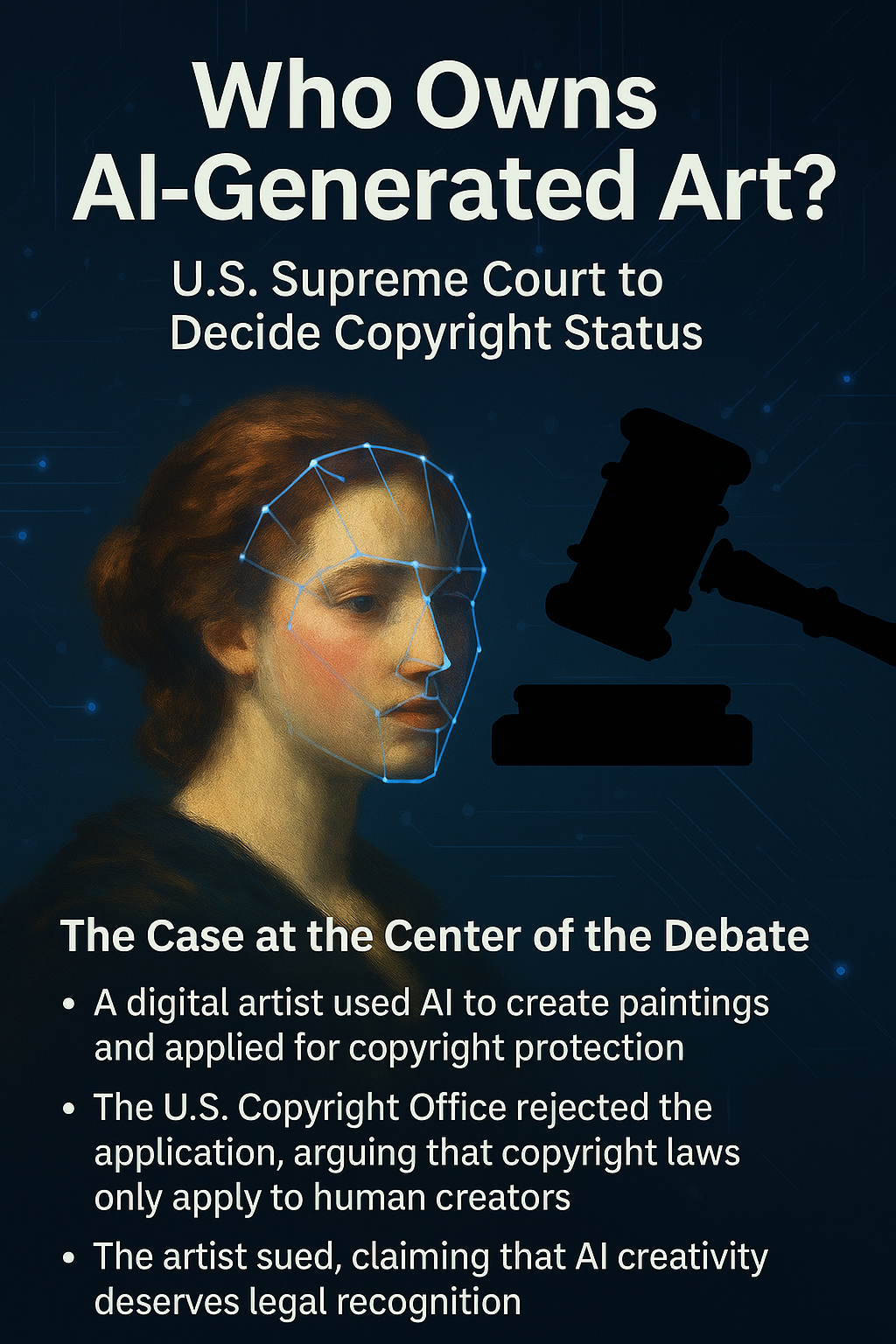
- Only humans can be authors. Autonomous AI cannot hold copyright.
- If humans contribute creativity (design, direction, selection), they may claim copyright.
- Patent law:
- Patents require an inventor who is a natural person in most jurisdictions.
- AI as inventor is generally rejected (see Thaler v. USPTO).
- Trade secret law:
- Protects confidential AI-generated designs without requiring authorship or inventorship.
- Employment/work-for-hire doctrine:
- AI outputs created under employment may belong to the employer.
3. Case Law Analysis
A. Thaler v. USPTO (DABUS AI), 2021 (U.S.)
- Facts: Dr. Stephen Thaler filed patents listing AI “DABUS” as inventor.
- Ruling: Courts rejected AI inventorship. Only humans can be inventors under U.S. law.
- Implication: AI-generated workforce automation designs cannot be patented in the AI’s name. Human programmers or managers must be listed as inventors.
B. Thaler v. IP Australia (2022, AU)
- Facts: Australian patent office rejected applications listing AI as inventor.
- Ruling: Only natural persons can be inventors.
- Implication: Global trend: AI cannot own patents; companies must attribute human inventors.
C. Naruto v. Slater (2018, U.S.)
- Facts: A monkey took a selfie; court ruled non-humans cannot hold copyright.
- Implication: Reinforces principle: non-human entities—including AI—cannot hold copyright.
D. Feist Publications v. Rural Telephone Service, 1991 (U.S.)
- Facts: Phone directory compilation; originality requirement in copyright.
- Ruling: Mere compilation without human creativity is not copyrightable.
- Implication: AI-generated automation blueprints without human creative input cannot be copyrighted.
E. Computer Associates v. Altai, 1992 (2nd Cir., U.S.)
- Facts: Software structure copyright infringement claim.
- Ruling: Only original expression, not underlying method/ideas, is copyrightable.
- Implication: AI blueprints’ underlying methods are unprotected; only human-directed documentation may be copyrighted.
F. SAS Institute v. World Programming Ltd., 2012 (ECJ, EU)
- Facts: Copying software functionality.
- Ruling: Functionality, methods, and algorithms are not copyrightable; code is protected.
- Implication: AI workforce models’ processes may be free to use; protection is only on creative expression authored by humans.
G. Alice Corp. v. CLS Bank, 2014 (U.S.)
- Facts: Computer-implemented abstract ideas patent eligibility.
- Ruling: Abstract ideas implemented on computers need an inventive concept to be patentable.
- Implication: AI-generated automation methods may need human inventive input to secure patents.
H. Work-for-Hire Doctrine (U.S.)
- Principle: Employees creating AI models or outputs as part of employment assign IP rights to employer automatically.
- Implication: In organizational contexts, the employer owns AI-generated workforce blueprints if produced by employees using company resources.
4. Practical Ownership Guidelines
- Fully autonomous AI blueprints:
- Likely no copyright or patent rights. May exist as trade secrets if kept confidential.
- Human-assisted AI blueprints:
- Human designers who provide creative input may claim copyright and patents.
- Corporate ownership:
- Work-for-hire and contracts can transfer AI-generated IP to employers or commissioning organizations.
- Trade secret protection:
- AI-generated blueprints can be protected by limiting access and maintaining confidentiality, regardless of copyright.
5. Key Takeaways
- AI cannot be an inventor or author. Human creative or inventive contribution is essential.
- Copyright: Only protects expression, not processes or algorithms.
- Patents: Require human inventors.
- Contracts & trade secrets: Practical way to secure ownership of AI-generated workforce automation blueprints.
- Global trend: Courts consistently favor human authorship/inventorship for IP, while AI outputs may still be valuable as trade secrets.
RELATED Blog



comments