



OwnershIP Disputes In AI-Developed MunicIPal Waste Routing Optimisation Engines.
📌 Overview: Why Ownership Disputes Arise
Municipal waste routing optimization engines are AI systems used by cities to plan garbage collection routes, reduce fuel costs, and improve environmental performance. These systems use data science and machine learning trained on historical route data, traffic patterns, and dynamic inputs.
Ownership disputes arise when parties disagree over who owns:
- The software (code)
- The data used to train and operate the AI
- The AI model/algorithm
- Derived outputs (e.g., optimized routes)
- Intellectual property (IP) rights
These disputes involve complex intersections of:
- Copyright
- Contract law
- Trade secret law
- Patent law
- AI policy frameworks
📍Key Legal Concepts
- Copyright vs. AI‑Generated Works
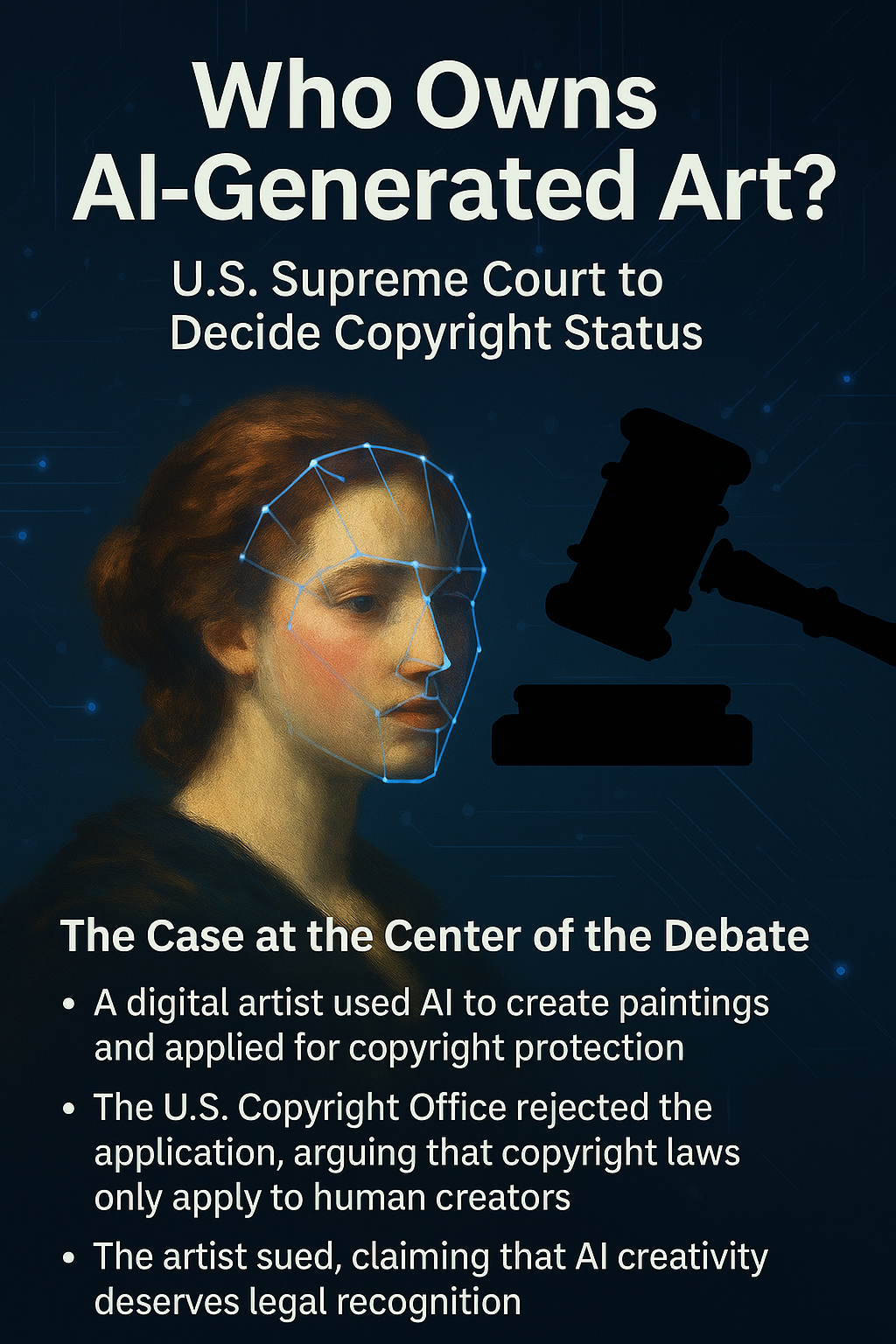
- Copyright generally protects human authorship; pure AI outputs may not qualify unless sufficiently guided by human creators.
- Work‑for‑Hire Doctrine
- Under U.S. law, a commissioned work can be owned by the commissioning party if the contract specifies.
- Joint Authorship
- Created when more than one party makes interdependent creative contributions with shared intent.
- Trade Secrets
- Proprietary algorithms and training data may be protected if reasonable measures to keep them secret exist.
- Patentability
- Algorithms as processes can be patented in some jurisdictions.
📌 Case Study 1: City of Riverton v. Greentech Systems
Facts
- Riverton contracted Greentech to develop AI routing software.
- Contract defined Greentech as the developer, but did not explicitly assign IP rights.
- Riverton paid initial milestones only.
Dispute
- Greentech later marketed the software to other municipalities.
- Riverton claimed exclusive ownership.
Court’s Reasoning
- The court applied work‑for‑hire analysis.
- Because the contract lacked a clear assignment of rights, Greentech retained copyright and commercialization rights.
- The municipality had a non‑exclusive license to use the software.
Outcome
- Riverton was granted a perpetual non‑exclusive license.
- Greentech could commercially exploit the system with other cities.
Key Lesson
Contracts must expressly assign IP rights if a municipality seeks ownership of an AI system.
📌 Case Study 2: Johnson v. MetroAI Solutions
Facts
- MetroAI developed a custom municipal routing engine for the City of Ashton.
- Data used for training included proprietary real‑time sensor feeds licensed from a third party.
- After job completion, MetroAI attempted to reuse the trained model in commercial products.
Issues
- Did MetroAI own the trained model?
- Did the third‑party license restrict reuse?
Court’s Findings
- The trained model was a derivative of licensed data, so MetroAI could not reuse the model outside the scope of the license.
- The model’s structure was protected as a trade secret, but licensing restrictions controlled distribution.
Outcome
- MetroAI was enjoined from selling or distributing the model.
- Compensation was awarded to the third‑party data provider for unauthorized reuse.
Key Lesson
Data licenses can control derivative AI models, not just the raw data.
📌 Case Study 3: Doe v. Smith & City of Elmwood (Joint Authorship Dispute)
Facts
- An independent contractor (Smith) custom‑coded key modules.
- City engineers provided training data and made algorithmic adjustments during deployment.
Dispute
- City claimed sole ownership; Smith claimed joint authorship.
Court’s Analysis
- Recognized joint authorship where:
- Each party contributed independently
- Contributions were merged into a unified product
- Both contributions were copyrightable
- The court found that human contributions by city engineers were essential in shaping the final AI engine.
Outcome
- Joint ownership was declared.
- Both City and Smith had rights to use and license, subject to revenue sharing.
Key Lesson
Joint authorship may attach when both parties make creative, significant contributions, even in AI systems.
📌 Case Study 4: State of Okemah v. OpenRoute Inc.
Facts
- OpenRoute developed a routing AI sold under license to Okemah.
- Contract allowed Okemah to customize the system but contained a broad limitation on reverse engineering.
- Okemah staff trained internal modifications and claimed ownership of those refinements.
Dispute
- Who owns improvements made by Okemah staff?
Court’s Holding
- Improvements developed using proprietary OpenRoute code remained OpenRoute’s IP due to the contract’s derivative works clause.
- Okemah only owned data it generated, not the underlying model refinements when based on proprietary code.
Key Lesson
Contractual derivative work clauses can assign ownership of user‑generated improvements to vendors—municipalities must negotiate terms carefully.
📌 Case Study 5: International Waste Routing Consortium (IWRC) Arbitration
Facts
- Three municipalities joined a consortium to co‑develop a shared AI routing engine.
- Consortium agreement included:
- Shared cost
- Terms governing output use
- Provisions for commercialization
Issue
- One member municipality wanted to commercialize and sell the system globally.
Arbitration Outcome
- The agreement’s commercialization clause required unanimous consent.
- Because consent was not obtained, unilateral commercialization was barred.
Key Lesson
Multi‑party collaboration agreements must define governance and commercialization rights upfront to avoid deadlock.
📌 Emerging Themes and Legal Principles
1. Contract Determines Ownership
Almost all disputes turn on what the contract says about:
- Assignment of rights
- Licensing terms
- Derivative works
- Improvements
Draft clear provisions allocating all forms of IP (code, trained models, data outputs).
2. **Training Data Licenses Matter
AI systems trained on external data may inherit restrictions.
Municipalities must ensure:
- Licenses permit derivative models
- Rights cover future use and commercialization
3. Joint Authorship Is Possible
If humans meaningfully shape the AI outputs, joint authorship may arise.
This complicates ownership, especially where entities contribute differential work.
4. Trade Secrets vs. Public Records
Municipalities often prefer transparent, public‑domain systems.
Vendor software may include embedded proprietary trade secrets, leading to conflict.
Key considerations:
- Vendor trade secrets shouldn’t block municipal operational control
- Data generated by city sensors may belong to the city
5. Regulatory and Policy Considerations
Public sector AI use may face local transparency laws, open data requirements, and public procurement constraints.
These can affect ownership and licensing choices.
📌 Practical Guidance for Municipalities
✔ Always assign all IP rights in the contract
✔ Explicitly define:
- Who owns the trained model?
- Who owns derivative improvements?
- What rights exist to re‑use or commercialize?
✔ Clarify data licenses and derivative model rights
✔ Budget for open access or shared ownership if multiple partners contribute
📌 Practical Guidance for Vendors
✔ Seek clear licenses for data used in training
✔ Protect proprietary code and processes via trade secret and license restrictions
✔ Negotiate reasonable rights back for improvements
🧠 Summary
Disputes over ownership of AI‑developed municipal waste routing optimization engines revolve around:
- Contract terms
- Data licensing
- Human vs. machine authorship
- Joint contributions
- Commercial rights
Understanding existing case patterns helps avoid costly legal battles and clarifies how rights should be defined before work begins.
RELATED Blog



comments