



Mask Mandates And Equality.
Mask Mandates and Equality: Constitutional and Legal Analysis
Mask mandates during public health emergencies—especially during COVID-19—raise an important constitutional question: can the State enforce a uniform rule (wearing masks) without violating the principle of equality and personal liberty? Courts across jurisdictions have generally upheld such mandates, but with important limits tied to equality, proportionality, and non-arbitrariness.
1. Conceptual Link Between Mask Mandates and Equality
Mask mandates are typically neutral laws of general application, meaning they apply to everyone regardless of religion, gender, caste, or status. On the surface, this aligns with equality principles. However, equality concerns arise in three main ways:
(A) Formal Equality vs Substantive Equality
- Formal equality: “Same rule for all” (everyone must wear a mask)
- Substantive equality: Recognizes that uniform rules may affect people differently (e.g., disabled persons, asthma patients, low-income groups lacking access to masks)
(B) Reasonable Classification
Under constitutional equality doctrine, a law must:
- Have an intelligible differentia
- Have a rational nexus with the objective
Mask mandates usually satisfy both, as their objective is public health.
(C) Non-arbitrariness and proportionality
Even neutral rules can be struck down if:
- They are excessive
- They are irrational
- They are enforced selectively
2. Key Case Laws (India + Comparative Jurisprudence)
1. Jacobson v. Massachusetts (1905, USA)
- Upheld compulsory vaccination laws.
- The US Supreme Court held that individual liberty is not absolute during public health emergencies.
- Established the principle that public health measures can restrict liberty if reasonable and necessary.
👉 Relevance: This case is the foundation for modern mask mandate jurisprudence.
2. Prince v. Massachusetts (1944, USA)
- Court upheld child labor restrictions despite religious objections.
- Held: “The right to practice religion freely does not include liberty to expose the community or the child to communicable disease.”
👉 Relevance: Supports masking laws overriding individual preference when public safety is at stake.
3. Employment Division v. Smith (1990, USA)
- Neutral laws of general applicability do not violate constitutional rights even if they incidentally burden religion.
👉 Relevance: Mask mandates are typically neutral and generally applicable, so they are usually constitutional even if they affect religious practices.
4. Roman Catholic Diocese of Brooklyn v. Cuomo (2020, USA)
- Struck down strict COVID-19 restrictions on religious gatherings.
- Court held that restrictions were not neutral because they treated religious gatherings more harshly.
👉 Relevance: Shows that if mask mandates or COVID rules are applied unevenly, they may violate equality principles.
5. Tandon v. Newsom (2021, USA)
- Held that government restrictions cannot treat religious activity worse than comparable secular activities.
- Introduced strict scrutiny for unequal treatment in COVID regulations.
👉 Relevance: Reinforces that equality requires consistent application of public health rules.
6. South Bay United Pentecostal Church v. Newsom (2021, USA)
- Addressed restrictions on worship during COVID-19.
- Court emphasized balancing public health and constitutional freedoms, with increasing scrutiny on unequal restrictions.
👉 Relevance: Demonstrates evolving judicial skepticism toward inconsistent pandemic restrictions.
7. E.P. Royappa v. State of Tamil Nadu (1974, India)
- Established that equality under Article 14 is against arbitrariness.
- “Equality is antithetic to arbitrariness.”
👉 Relevance: If mask mandates are enforced arbitrarily (selectively targeting groups), they violate equality.
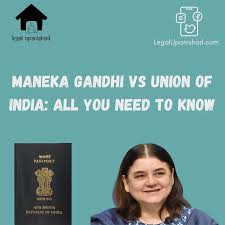
8. Maneka Gandhi v. Union of India (1978, India)
- Expanded Article 14, 19, and 21 interplay.
- Any law affecting liberty must be fair, just, and reasonable.
👉 Relevance: Mask mandates are valid only if procedurally fair and reasonable.
9. K.S. Puttaswamy v. Union of India (2017, India)
- Recognized privacy as a fundamental right.
- Any restriction must satisfy legality, necessity, and proportionality.
👉 Relevance: Mask mandates must be proportionate and based on legitimate public health necessity.
10. Shayara Bano v. Union of India (2017, India)
- Struck down triple talaq as arbitrary.
- Reinforced the doctrine of manifest arbitrariness under Article 14.
👉 Relevance: A mask mandate that is irrational, inconsistent, or excessive could be invalidated as arbitrary.
3. Equality Issues in Mask Mandates
(A) Differential Impact
- People with respiratory conditions may face hardship
- Economically weaker groups may lack access to quality masks
- Informal workers may be disproportionately penalized for non-compliance
(B) Selective Enforcement
Equality is violated if:
- Police enforce masks strictly in poor areas but not in elite areas
- Certain communities are targeted more than others
(C) Disability Accommodations
Under equality principles, States are expected to provide:
- Exemptions or alternatives for disabled individuals
- Reasonable accommodation where strict compliance is impossible
4. Legal Principles Emerging from Case Law
From the above cases, courts generally apply these standards:
1. Public Health Justification
(from Jacobson, Prince)
- Strong public health interest can justify restrictions.
2. Neutrality and General Applicability
(from Smith, Tandon)
- Laws must apply equally without targeting groups.
3. Proportionality
(from Puttaswamy, Maneka Gandhi)
- Restriction must be the least intrusive means.
4. Non-arbitrariness
(from E.P. Royappa, Shayara Bano)
- Rules must not be irrational or inconsistent.
5. Conclusion
Mask mandates are generally constitutionally valid under equality principles because they:
- Apply uniformly
- Serve a strong public health purpose
- Are typically neutral and non-discriminatory
However, they must still pass constitutional scrutiny on:
- Fairness of enforcement
- Reasonable exemptions
- Proportional impact on vulnerable groups

RELATED Blog





comments