



Juvenile Delinquency Investigations And Rehabilitation Programs
1. Introduction to Juvenile Delinquency
Juvenile delinquency refers to criminal acts committed by persons below the age of majority, typically under 18 years. Juvenile justice systems recognize that children have different levels of maturity, understanding, and accountability, and therefore require special procedures for investigation, trial, and rehabilitation.
Key principles in juvenile justice:
Best interest of the child: The focus is on rehabilitation rather than punishment.
Separate procedures: Juveniles are dealt with in specialized courts.
Confidentiality: Juvenile records are protected to avoid social stigma.
Rehabilitation and reintegration: Emphasis on education, counseling, and skill development.
2. Legal Framework
India
Juvenile Justice (Care and Protection of Children) Act, 2015 (JJ Act)
Covers children in conflict with law (CCL) and children in need of care and protection (CNCP).
Establishes Juvenile Justice Boards (JJBs) for trial.
Provides for observation homes, rehabilitation centers, and adoption procedures.
International
UN Convention on the Rights of the Child (UNCRC)
Advocates for rehabilitation, protection, and reintegration of juvenile offenders.
Investigation Procedures
Specialized police officers trained in dealing with juveniles conduct the investigation.
Juveniles are not subjected to harsh interrogation and have legal guardians or lawyers present.
Forensic and psychological assessments are often conducted to determine the mental state and risk factors.
Rehabilitation Programs
Counseling and psychotherapy
Skill development and vocational training
Education programs within juvenile homes
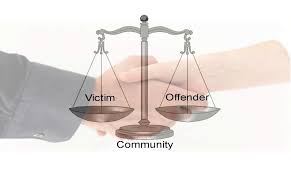
Community service and restorative justice programs
Family and community reintegration initiatives
3. Case Law on Juvenile Delinquency
Case 1: Bachan Singh v. State of Punjab (1980, India) – Juvenile Reference
Facts:
In the context of capital punishment debates, this case clarified that juveniles under 18 cannot be sentenced to death.
Decision:
Supreme Court emphasized that children are less culpable due to immaturity and should be treated differently.
Significance:
Reinforced the principle of rehabilitation over retribution for juvenile offenders.
Case 2: Sheela Barse v. Union of India (1986, India)
Facts:
Concerned the conditions of juvenile homes and protection of children in conflict with law.
Decision:
Supreme Court directed the government to improve living conditions, education, and rehabilitation in observation homes.
Established guidelines for separation of juveniles from adult prisoners.
Significance:
Laid down standards for humane treatment of juveniles during detention and reinforced the importance of rehabilitation.
Case 3: Delhi Juvenile Cases – 2009 Nirbhaya Case (India)
Facts:
A 17-year-old juvenile participated in the gang rape and murder case in Delhi.
Issue:
How to balance public outrage, serious crimes, and juvenile status.
Decision:
Juvenile was tried under the Juvenile Justice Act, and reforms were later made to allow trial of 16-18-year-olds for heinous crimes in certain cases.
Significance:
Highlighted the limitations of juvenile justice in heinous offenses and led to amendments in JJ Act 2015.
Case 4: In re Gault (1967, USA)
Facts:
Gerald Gault, a 15-year-old, was sentenced to a juvenile facility without proper notice or legal representation.
Decision:
U.S. Supreme Court held juveniles have constitutional rights: right to notice, legal counsel, confrontation of witnesses, and protection against self-incrimination.
Significance:
Set a global precedent emphasizing fair trial and due process rights for juveniles.
Case 5: R v. Secretary of State for the Home Department, ex parte JTB (2003, UK)
Facts:
Concerned a juvenile detained under immigration and accused of criminal acts.
Decision:
Court emphasized individualized treatment, rehabilitation planning, and education for juveniles in detention.
Significance:
Reinforced rehabilitation and reintegration principles in European juvenile justice systems.
Case 6: M. vs. State of Kerala (1994, India)
Facts:
Juvenile arrested for theft and subjected to prolonged detention in adult facilities.
Decision:
Supreme Court ordered separation from adult prisoners, educational opportunities, and psychological counseling.
Significance:
Reinforced JJ Act provisions to protect juveniles and emphasize rehabilitation.
4. Key Principles from Case Law
Juveniles cannot be treated the same as adults:
Capital punishment or long-term imprisonment is prohibited in most jurisdictions.
Right to fair trial:
Legal representation, notice of charges, and proper procedures are essential.
Focus on rehabilitation over punishment:
Educational programs, counseling, and skill development are prioritized.
Separation from adult prisoners:
Juveniles must be housed in separate observation homes.
Individualized treatment:
Each juvenile case requires psychological and social assessment for tailored rehabilitation.
5. Rehabilitation Programs
Observation Homes: Short-term facilities where juveniles are assessed.
Special Homes/Reformatories: Long-term rehabilitation, skill training, and education.
Foster Care and Adoption: For children without parental support.
Community-Based Programs: Mentorship, counseling, and social reintegration.
6. Conclusion
Juvenile delinquency law emphasizes protection, fair treatment, and rehabilitation rather than punitive measures. Case law demonstrates that:
Juveniles have constitutional protections (In re Gault).
Rehabilitation and education are central (Sheela Barse, M vs. Kerala).
Serious crimes may require special legislative consideration (Delhi Nirbhaya juvenile case).
International principles advocate reintegration and social protection.
The combined approach of legal safeguards, individualized assessments, and structured rehabilitation programs helps prevent recidivism and ensures juveniles reintegrate into society as responsible citizens.
RELATED Blog








comments