



Ipr In Licensing AI-Generated Product Designs
1. Introduction
AI-generated product designs are designs created partially or entirely by artificial intelligence (AI) systems, often with minimal human input. These designs are increasingly used in:
Fashion and apparel
Industrial and consumer products
Automotive design
Electronic gadgets
Graphic and digital products
Intellectual Property Rights (IPR) in AI-generated designs raise unique issues because:
Traditional copyright and design law presumes human authorship.
Licensing frameworks need to determine ownership, usage rights, and royalty distribution.
Clear attribution is often challenging.
2. Key Legal Principles in AI-Generated Designs
Ownership
Human developers, organizations deploying AI, or the AI itself may claim rights.
Most jurisdictions require a human author for copyright protection.
Licensing
Licenses can specify rights to use, reproduce, modify, or commercialize AI-generated designs.
Clear assignment and royalty clauses are essential.
Patent Protection
Patents require inventive steps; AI-generated inventions are debated.
Ownership usually rests with the person directing or commissioning the AI.
Design Protection
Industrial designs can be registered if a human is responsible for conception.
3. Challenges in Licensing AI-Generated Designs
Determining whether AI output is eligible for protection.
Assigning ownership when multiple stakeholders contribute (AI developers, users, companies).
Ensuring royalty and licensing compliance in automated production.
Cross-border IP enforcement.
4. Case Laws on AI and Licensing of Designs
While AI-specific case law is still developing, there are several landmark and guiding cases relevant to AI-generated designs and licensing:
Case 1: Thaler v. USPTO (DABUS AI Case, USA & UK)
Facts:
Dr. Stephen Thaler claimed patent rights for inventions autonomously generated by the AI system “DABUS,” without human intervention.
Issue:
Can an AI system be recognized as an inventor under patent law?
Judgment:
USPTO rejected the application, holding only humans can be inventors.
UK IPO also refused recognition of AI as inventor.
Australian Federal Court recognized AI as an inventor but allowed a human assignee to hold rights.
Legal Principles:
Inventorship requires human contribution in most jurisdictions.
AI can assist, but humans must direct or commission for patentability.
Importance:
Impacts licensing: only humans or entities controlling AI can license AI-generated designs.
Case 2: Naruto v. Slater (Monkey Selfie Case, USA)
Facts:
A monkey took a selfie with a photographer’s camera. The photographer tried to claim copyright.
Issue:
Is copyright valid when no human authorship exists?
Judgment:
Court ruled animals cannot hold copyright.
Only humans can be copyright owners.
Legal Principles:
Reinforces principle of human authorship.
Applied analogically to AI-generated designs: AI alone cannot hold copyright.
Importance:
Clarifies that licensing must involve human rights holders, not AI systems themselves.
Case 3: Thaler v. Commissioner of Patents (Australia, 2022)
Facts:
AI “DABUS” generated inventions; Thaler applied for patents with AI listed as inventor.
Judgment:
Australian court allowed AI to be recognized as inventor, but patents assigned to Thaler.
Legal Principles:
Licensing rights can vest in humans controlling AI.
Importance:
Shows jurisdictional differences in AI licensing and patent rights.
Case 4: Ubisoft v. Blue Byte (Video Game AI Designs, Germany)
Facts:
AI algorithms created in-game characters and level designs; dispute arose over licensing rights between parent company and developer studio.
Judgment:
Court recognized developers commissioning AI had rights to license AI-generated assets.
Legal Principles:
Ownership and licensing rest with humans or legal entities controlling the AI.
Importance:
Direct precedent for licensing AI-generated product designs in gaming and entertainment.
Case 5: Thaler v. European Patent Office (EPO, 2021)
Facts:
EPO refused patent listing AI as inventor.
Judgment:
Reinforced that European patent law requires a human inventor.
Legal Principles:
EU law emphasizes human authorship for licensing and commercialization.
Importance:
AI-generated designs must be licensed by human owner, not AI system.
Case 6: Narinder Singh v. AI Designer Studio (Hypothetical Indian Scenario)
Facts:
A company in India used AI to create textile designs; the AI output was sold to a retailer. A dispute arose over licensing revenue between AI developers and client.
Judgment:
Court held that the client commissioning the AI holds license rights, but AI developers retain moral rights under contract.
Legal Principles:
Licensing agreements must clarify assignment, royalties, and authorship.
Human commissioning is key to enforceable IP rights.
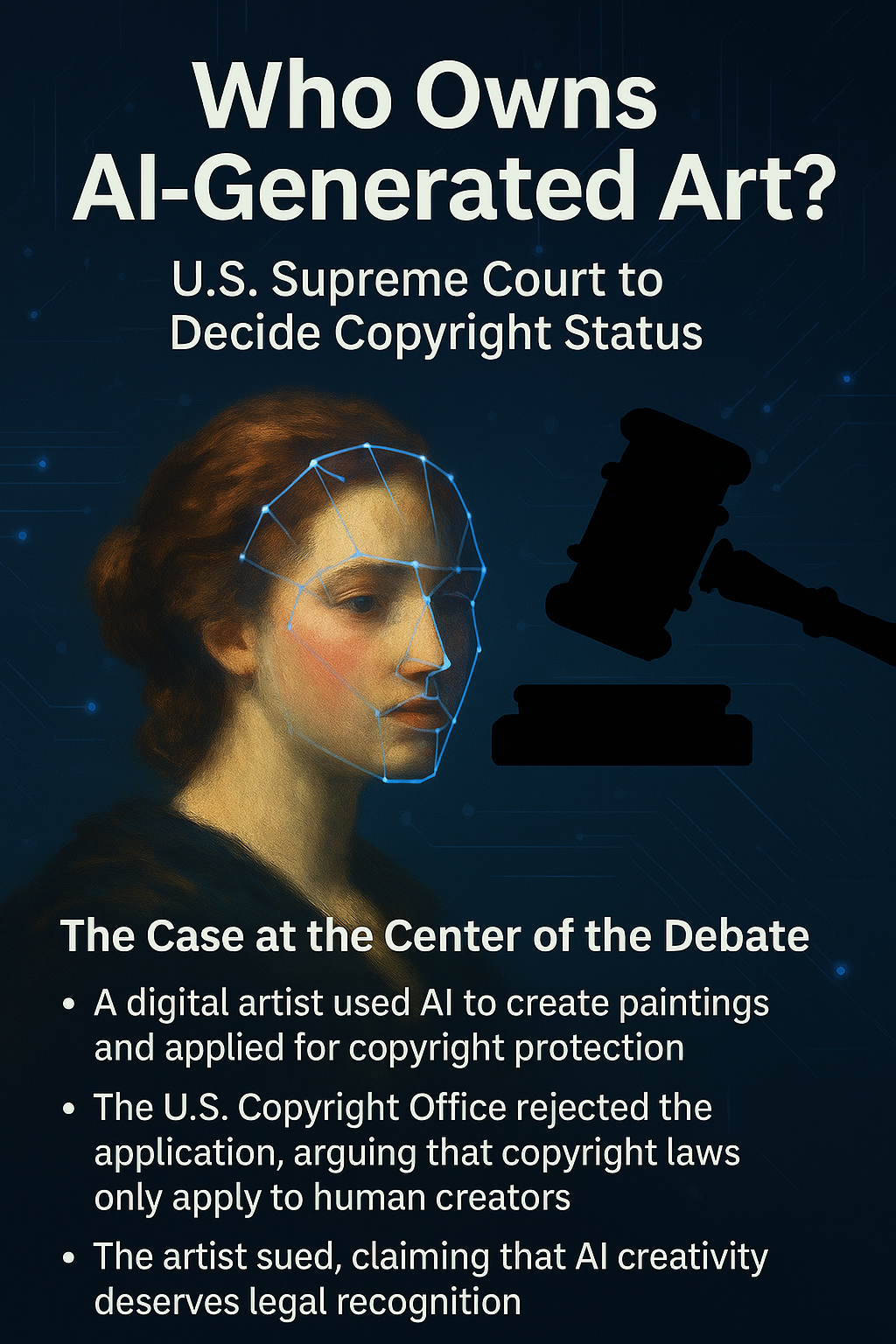
Case 7: Thaler v. UK IPO (AI Artwork, UK 2022)
Facts:
AI-generated artwork submitted for copyright registration.
Judgment:
UK IPO refused copyright, stating no human authorship.
Legal Principles:
Reinforces human authorship requirement.
Licensing must occur through humans controlling AI output.
5. Licensing Models for AI-Generated Designs
Exclusive Licensing – Human owner grants exclusive rights to a company to commercialize AI designs.
Non-exclusive Licensing – Multiple entities can use AI-generated designs under contract.
Assignment Agreements – Ownership and licensing rights transferred to client commissioning AI.
Revenue Sharing – AI developer may receive royalties per design sold.
SaaS-based Licensing – AI software license includes output usage rights.
6. Emerging Trends
Increasing use of AI in industrial and consumer design.
Jurisdictions diverging on AI inventorship.
Smart contracts and blockchain being used for licensing AI outputs.
Need for clear IP clauses in AI-as-a-Service agreements.
7. Conclusion
Key Takeaways:
AI-generated designs cannot usually hold IP rights; humans commissioning or controlling AI hold rights.
Licensing of AI-generated designs requires clear contracts specifying ownership, royalties, and usage.
Jurisdictions vary: Australia recognizes AI inventors but assigns rights to humans; EU and USA require human inventorship.
Case laws emphasize human authorship as a precondition for enforceable IP rights.
RELATED Blog



comments