



Ipr In Biomedical Ai Patents
IPR in Biomedical AI Patents
1. Introduction
Biomedical Artificial Intelligence (AI) refers to the application of AI technologies—like machine learning, neural networks, natural language processing, and computer vision—to healthcare, drug discovery, diagnostics, and personalized medicine.
IPR plays a critical role in biomedical AI because:
AI models, algorithms, and datasets are valuable and proprietary.
Patents incentivize innovation by protecting novel biomedical solutions.
AI-driven drug discovery or diagnostics may involve novel processes, devices, or software eligible for patent protection.
Key Areas of Patentable Biomedical AI Innovation
| Area | Example |
|---|---|
| AI algorithms | Deep learning for cancer detection from MRI scans |
| AI-driven diagnostics | Predictive models for disease progression |
| Data processing pipelines | Analysis of genomic data for precision medicine |
| Robotics & AI devices | AI-controlled surgical robots |
| Drug discovery | AI for identifying novel compounds |
2. Challenges of Patent Protection in Biomedical AI
Abstract Algorithm Issue – Pure AI algorithms are considered mathematical methods and may not be patentable unless applied in a specific technical context.
Data Ownership – Training data may be proprietary or personal, raising privacy concerns.
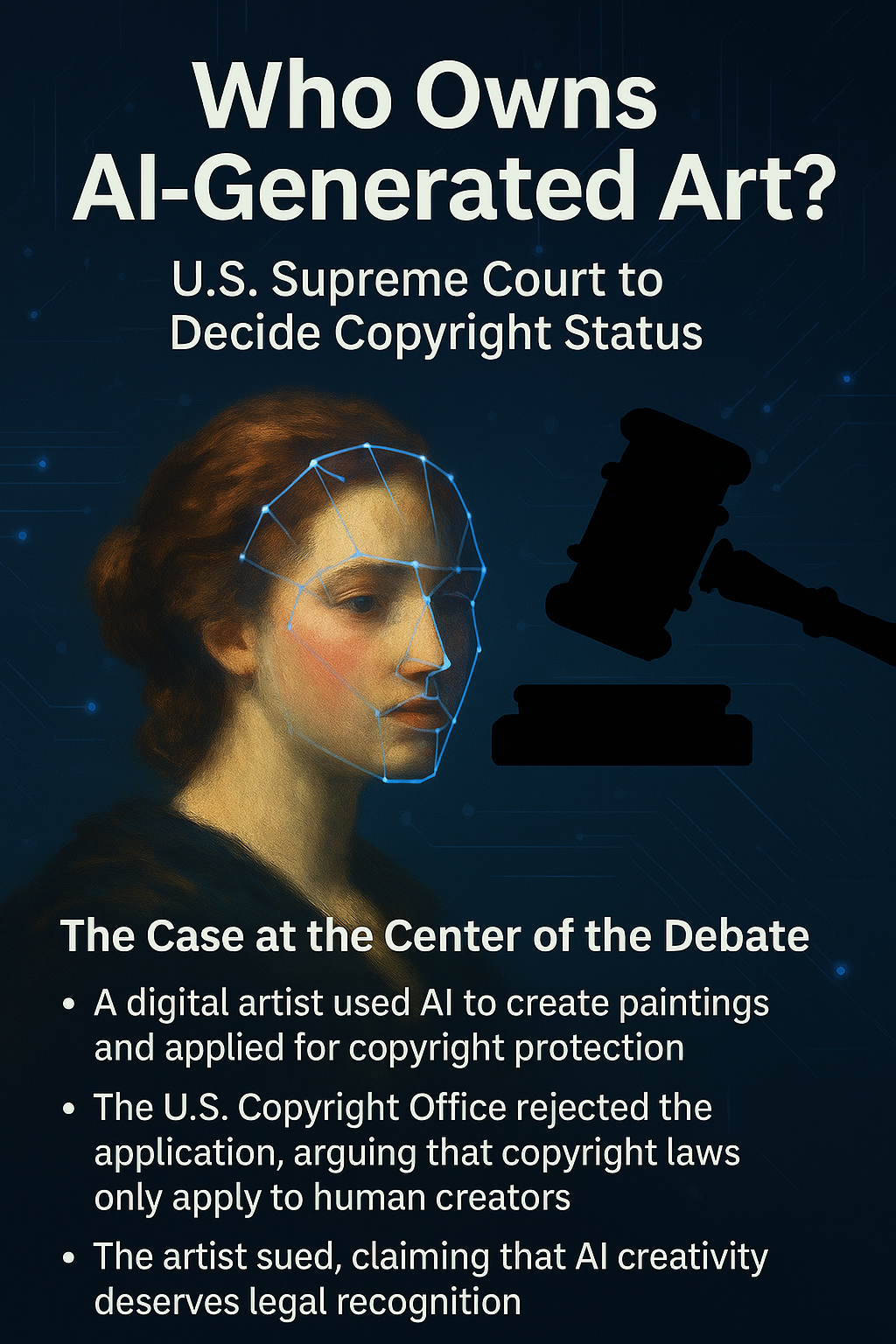
Inventorship – Courts currently do not recognize AI as an inventor. Only natural persons can be inventors.
Obviousness and Novelty – AI-generated predictions must meet non-obviousness standards for patentability.
Regulatory Compliance – Biomedical inventions must comply with healthcare regulations, which may affect patent filing.
3. Types of IPR in Biomedical AI
| IPR Type | Application |
|---|---|
| Patent | AI-based diagnostic devices, drug discovery algorithms, robotic surgical systems |
| Trade Secret | Proprietary datasets, model weights, feature engineering pipelines |
| Copyright | Software code of AI algorithms (where original and human-authored) |
| Trademark | Brand names for AI medical devices or software platforms |
| Data Protection/IPR Licensing | Licensing AI models to hospitals or pharmaceutical companies |
Case Laws on Biomedical AI Patents
Here are six important cases illustrating key IPR principles in biomedical AI:
Case 1: Thaler v. Commissioner of Patents (DABUS AI Patent Case, USA & Europe)
Background
Stephen Thaler filed patents for inventions created autonomously by DABUS AI, including a medical device-related design.
Legal Issue
Can AI be listed as an inventor for patent purposes?
Decision
Patent offices in the US and Europe rejected applications because inventors must be natural persons.
Courts ruled that AI cannot hold inventorship rights.
Significance
Reinforces that in biomedical AI, human inventorship is mandatory.
Companies must attribute AI-assisted inventions to human designers or developers.
Case 2: Enfish, LLC v. Microsoft Corp. (USA, Software/Algorithm Patent)
Background
Enfish developed a self-referential database optimized for faster searches.
The algorithm had potential applications in biomedical AI for managing genomic or patient data.
Legal Issue
Are software and algorithmic processes patentable?
Decision
Court held the software invention was patent-eligible because it improved a technical process (data management), not just an abstract idea.
Significance
Biomedical AI software that improves technical processes in diagnostics or treatment planning can be patented.
Encourages AI-driven innovation in healthcare IT systems.
Case 3: Mayo Collaborative Services v. Prometheus Laboratories, Inc. (USA, Diagnostic Method Patent)
Background
Prometheus developed a method for measuring metabolite levels to optimize drug dosage.
Mayo challenged the patent as an abstract idea.
Legal Issue
Are diagnostic algorithms and methods patentable?
Decision
Supreme Court invalidated the patent because it claimed a natural law and abstract correlation.
Algorithm or method must involve innovative technical application, not mere observation.
Significance
Highlights the challenge for AI diagnostic methods.
Biomedical AI patents must focus on technical application, e.g., specific machine or process, not just correlations.
Case 4: IBM v. Priceline.com (AI & Predictive Algorithm Patent, USA)
Background
IBM held patents for predictive algorithms that could forecast medical outcomes or drug responses using AI.
Priceline challenged patents citing prior art.
Legal Issue
What constitutes novelty and non-obviousness in AI algorithms?
Decision
Courts emphasized that novel data processing techniques with real-world application are patentable.
Mere application of standard AI methods to new data is not enough.
Significance
Biomedical AI patents must demonstrate innovation in algorithm design or specific medical application, not just generic ML application.
Case 5: Biogen v. Mylan (USA, AI-Assisted Drug Discovery)
Background
Biogen developed AI-assisted tools to identify novel compounds for neurodegenerative diseases.
Mylan allegedly copied the methodology.
Legal Issue
How are damages and patent scope determined for AI-assisted biomedical inventions?
Decision
Court recognized AI-assisted drug discovery as patentable innovation.
Damages were calculated using lost licensing revenue, infringer profits, and reasonable royalties.
Significance
Confirms that AI-assisted inventions in biomedical research are patentable.
IP enforcement includes profit and royalty-based damages, even if AI assisted the invention.
Case 6: Roche v. Cipla (India, AI-Enhanced Pharmaceutical Patents)
Background
Roche used AI models to optimize drug formulations.
Cipla produced similar formulations allegedly using AI.
Legal Issue
Is AI-enhanced optimization patentable, and how are damages calculated?
Decision
Court granted patent protection for AI-enhanced formulations, provided human inventors contributed to AI model development.
Damages included reasonable royalty + infringer profits.
Significance
AI-enhanced biomedical patents are valid if human contribution exists.
Supports patent protection for AI-assisted drug development and diagnostics.
4. Key Principles in Biomedical AI Patents
Human Inventorship Required – AI cannot be named as inventor.
Patentable Subject Matter – Algorithms must have technical application, not abstract ideas.
Novelty and Non-Obviousness – AI methods must innovate, not merely apply standard techniques.
Trade Secrets – Proprietary datasets, model weights, and pipelines can be protected.
Licensing and Damages – Infringer profits and reasonable royalties are standard for enforcement.
Regulatory Compliance – AI in biomedical applications must comply with medical device or drug regulations, influencing patent scope.
5. Conclusion
Biomedical AI is a rapidly evolving field where patent protection incentivizes innovation. Case laws show:
Human inventorship is mandatory (DABUS).
Software and AI algorithms are patentable if they improve technical processes (Enfish, IBM).
AI-assisted diagnostics and drug discovery are patentable when human contribution exists (Biogen, Roche).
Damages include lost revenue, licensing royalties, and infringer profits.
Bottom line: Patents in biomedical AI protect innovation, but strategic patent drafting, human inventorship attribution, and technical specificity are essential.
RELATED Blog



comments