



Ipr In AI-Assisted Robotic Ip Commercialization Strategies.
IPR IN AI-ASSISTED ROBOTIC IP COMMERCIALIZATION STRATEGIES
1. Introduction
AI-assisted robotics—such as autonomous manufacturing robots, service robots, or traffic management robots—represent highly innovative technologies. These systems combine:
Robotics (mechanical and electrical innovation)
AI algorithms (decision-making, optimization)
Software systems (control, data analysis)
Sensors and IoT connectivity
Commercialization of these AI-assisted robots relies heavily on Intellectual Property Rights (IPR) to protect innovation, generate revenue, and secure competitive advantage.
Key focus areas in commercialization include:
Patents: Protect hardware designs, AI algorithms (if tied to technical effect), and robotic processes.
Copyrights: Protect software, databases, and AI-generated creative outputs.
Trade Secrets: Protect proprietary algorithms, datasets, and machine learning models.
Licensing & Franchising: Strategies for monetizing AI-robot IP through commercial partnerships.
Standard-Essential Patents (SEPs): Patents required for interoperability, often used in robotic ecosystems.
2. IPR Strategies in AI-Robotic Commercialization
A. Patent-Centric Strategies
Filing patents early: Protects innovation before competitors copy AI-assisted robotics.
Portfolio building: Combine hardware, AI software, and process patents to create “patent fences.”
Cross-licensing: Exchange patents with other companies to reduce litigation risk and promote collaboration.
B. Copyright & Software Licensing
Protect AI algorithms as software (where permitted)
Database protection for training datasets
Open-source licensing: Some companies release non-core AI to encourage adoption while monetizing proprietary AI.
C. Trade Secret Protection
Keep training data, AI models, and optimization algorithms secret
Often used where patent disclosure would reveal competitive advantage
Requires internal policies, NDAs, and employee agreements
D. Collaborative Commercialization
Joint ventures: Share development costs and IP ownership
AI-as-a-Service: Monetize AI robotic functionality via subscription models
Government collaboration: Public-private partnerships with clear IP terms
E. Monetization via Litigation & Enforcement
Enforce IP rights to prevent copycats
Leverage patent portfolios for royalties or litigation settlements
3. Key Legal Issues in AI-Robotic IP Commercialization
Who owns AI-generated inventions?
AI cannot hold patents (Thaler v. Comptroller-General). Ownership lies with human inventors or organizations.
Patentability of AI algorithms:
Only when tied to a technical effect (Diamond v. Diehr; Alice Corp. v. CLS Bank).
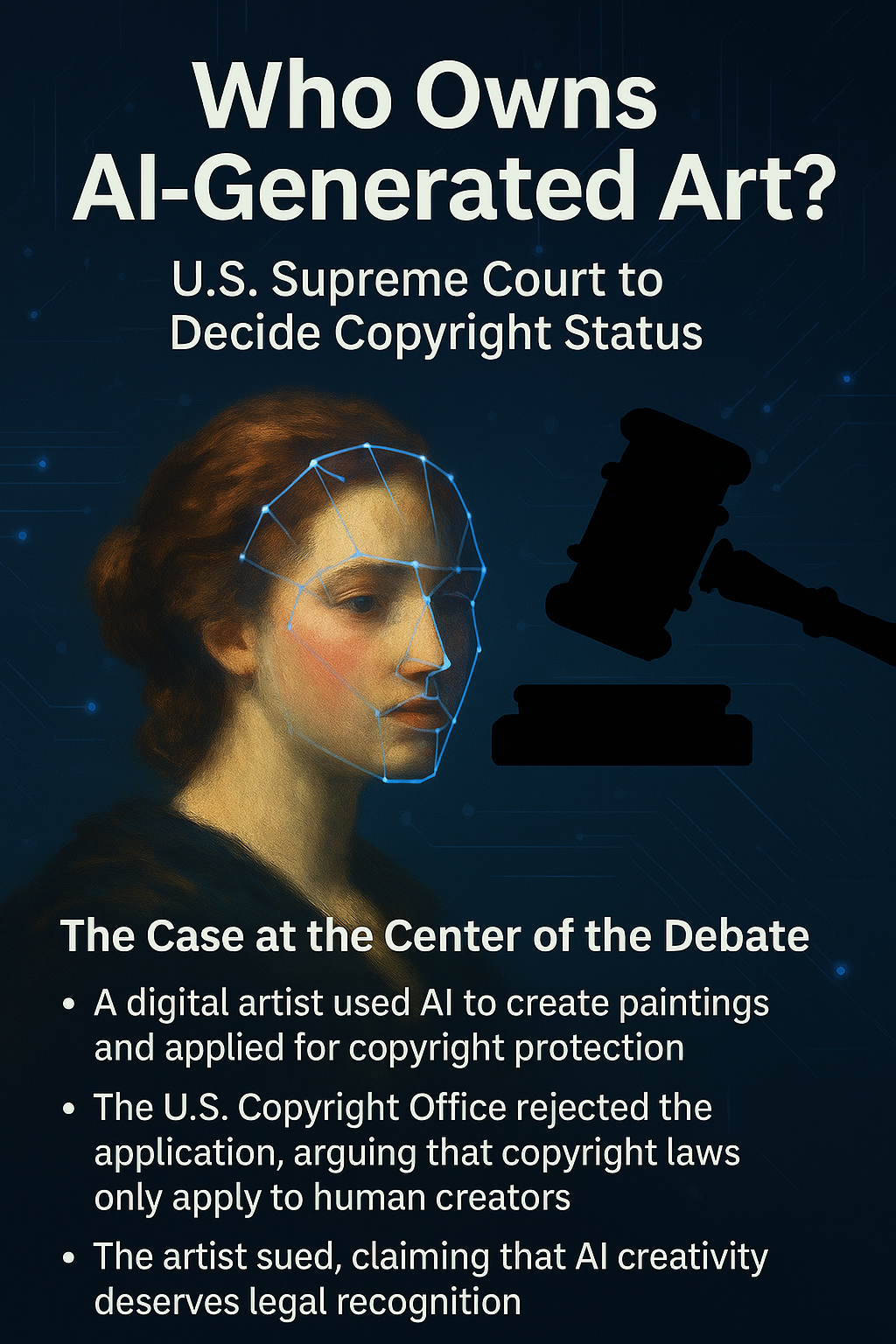
Copyrightability of AI-generated outputs:
Only human-authored work is copyrightable (Naruto v. Slater).
Trade secret vs. patent:
Companies must decide whether to disclose AI innovation via patent or keep it secret.
Licensing strategies:
AI-assisted robotics often require complex licensing arrangements for software, hardware, and data.
4. Relevant Case Laws (Detailed)
Case 1: Diamond v. Diehr (1981, US Supreme Court)
Facts: Rubber curing process controlled by a computer algorithm.
Issue: Whether a software-based process is patentable.
Judgment: Patentable if software produces a technical effect.
Relevance: Patents for AI-assisted robotics with real-world effect (e.g., robotic traffic systems, manufacturing robots) are valid. Supports commercialization via patent licensing.
Case 2: Alice Corp. v. CLS Bank International (2014, US Supreme Court)
Facts: Software for financial transactions.
Issue: Are abstract software ideas patentable?
Judgment: Abstract ideas are not patentable unless tied to inventive concept.
Relevance: AI algorithms for robotic automation must be linked to hardware or specific processes to monetize IP effectively.
Case 3: Thaler v. Comptroller-General of Patents (UK Supreme Court, 2023)
Facts: AI system DABUS listed as inventor for patent applications.
Issue: Can AI be an inventor?
Judgment: AI cannot be named inventor; only humans can.
Relevance: Organizations commercializing AI robots must assign IP rights to developers or corporations, not AI.
Case 4: Naruto v. Slater (2018, US Court of Appeals)
Facts: Monkey took a selfie; copyright ownership disputed.
Judgment: Non-humans cannot own copyright.
Relevance: AI-generated robotic outputs (images, designs) require human authorship for copyright protection.
Case 5: Eastern Book Company v. D.B. Modak (India, 2008)
Facts: Originality and copyright of databases.
Judgment: “Modicum of creativity” is required.
Relevance: AI training datasets or robotic operational databases may not get copyright protection unless human selection or design adds creativity. Impacts licensing of AI datasets in commercial models.
Case 6: Bilski v. Kappos (2010, US Supreme Court)
Facts: Abstract business methods implemented in software.
Judgment: Abstract ideas alone are not patentable.
Relevance: Robotic AI methods must have technical implementation to be patentable, enabling IP monetization.
Case 7: R (on the application of Newbery) v. Intellectual Property Office (UK, 2009)
Facts: Patent for computer-based control of machines.
Judgment: Patents are valid if software produces technical effect.
Relevance: Reinforces that AI robotic processes (manufacturing, traffic, logistics) can be patented and commercialized.
5. AI-Robotic IP Commercialization Strategies: Legal Implications
| Strategy | Legal Tool | Example | Benefit |
|---|---|---|---|
| Patent Fencing | Patents | Robotic arm + AI motion planning | Prevent competitors from copying innovation |
| Licensing AI Models | Copyright/Patent | Sell AI navigation software | Revenue stream via SaaS |
| Trade Secret | NDA & confidentiality | Proprietary AI training data | Competitive advantage without disclosure |
| Collaboration | Joint ownership | Public-private traffic robots | Shared development, risk reduction |
| Open Innovation | Open-source licensing | Non-core AI released | Market adoption, ecosystem creation |
6. Conclusion
Commercialization of AI-assisted robotic IP requires:
Careful IPR strategy balancing patents, trade secrets, and copyrights.
Legal clarity on AI authorship (humans hold IP, not AI).
Technical implementation focus to secure patent protection.
Licensing, franchising, and partnerships for monetization.
Key Takeaways:
Patents enable direct licensing or defensive strategy.
Trade secrets safeguard proprietary AI logic.
Copyright applies only to human-authored elements.
Legal precedents emphasize human authorship and technical effect.
RELATED Blog



comments