



Ipr In AI-Assisted Quantum Robotics Ip.
1. Understanding IPR in AI-Assisted Quantum Robotics
AI-Assisted Quantum Robotics (AI-QR) refers to the integration of artificial intelligence (AI) with quantum computing in robotic systems. These systems can optimize decision-making, learn complex tasks, and operate in environments with huge computational requirements.
Intellectual Property (IP) rights become critical because such systems often involve:
Software algorithms (AI models, quantum algorithms) – usually protected under copyright or software patents.
Hardware innovations (quantum processors, robotic mechanisms) – patentable as inventions.
Databases/training data – can be protected under database rights or trade secrets.
Hybrid inventions – combinations of AI, quantum computing, and robotics, which pose complex IP challenges, especially about inventorship and ownership.
The legal challenges include:
Inventorship: Can AI be recognized as an inventor?
Patent eligibility: Are AI-generated quantum robotics inventions patentable?
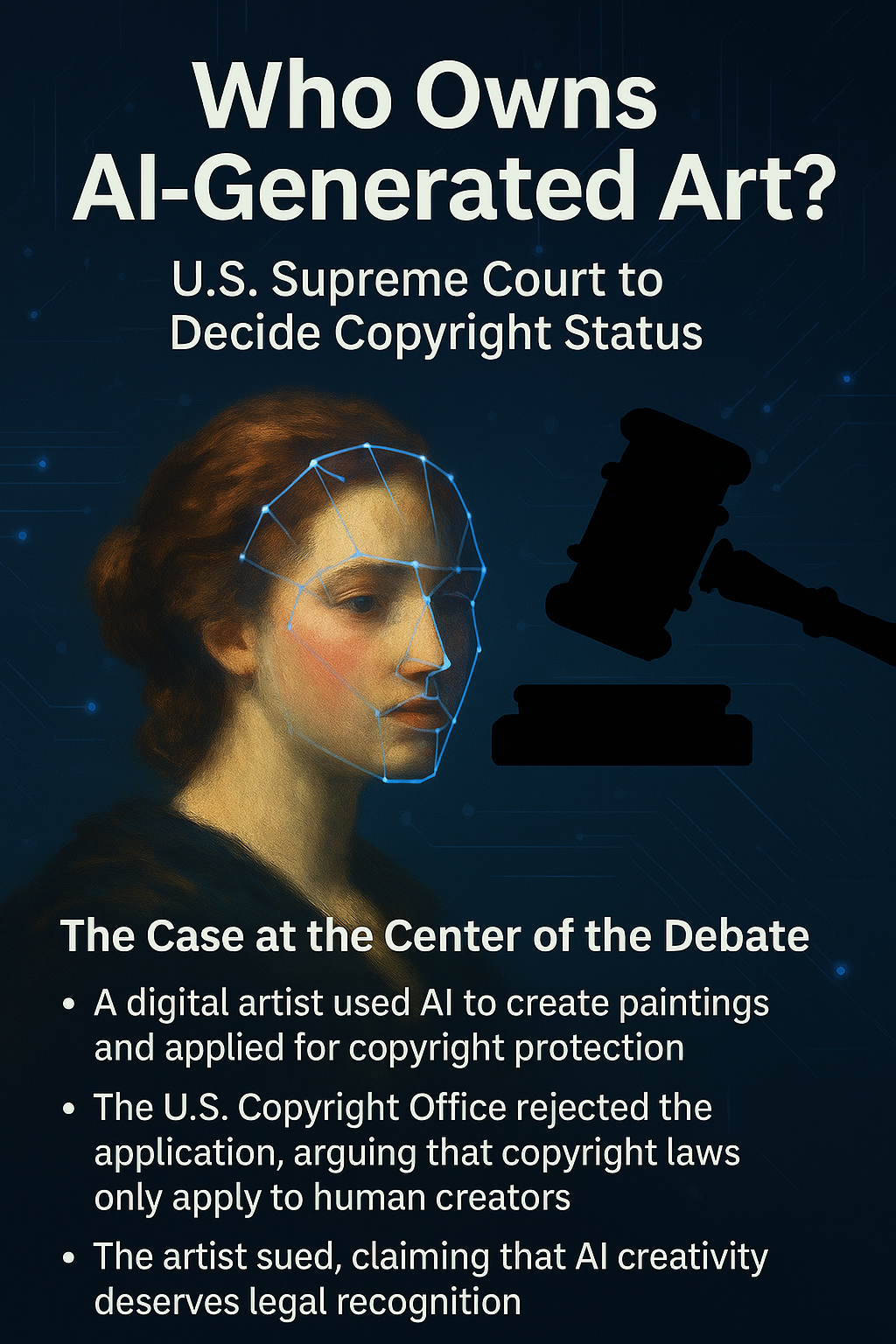
Ownership of outputs: Who owns AI-generated innovations, especially when AI operates autonomously?
2. Case Law Examples on AI, Robotics, and IP
Case 1: Thaler v. Commissioner of Patents (DABUS AI Case – 2020-2022)
Facts:
Stephen Thaler applied for patents listing DABUS, an AI system, as the inventor for two inventions, including a food container and a neural flame device.
The patent offices in the US, UK, and Europe rejected the applications because the inventor must be a natural person.
Significance for AI-Assisted Quantum Robotics:
Shows that AI cannot currently be recognized as an inventor under patent law.
For AI-QR inventions, the human programmer or developer is considered the inventor.
Lesson: Patents in AI-QR must list humans as inventors even if AI contributed autonomously.
Case 2: Alice Corp. v. CLS Bank International (2014)
Facts:
Alice Corp. held a patent for a computer-implemented financial method.
CLS Bank argued it was an abstract idea and not patentable.
Supreme Court ruled that abstract ideas implemented on computers are not patentable unless they have an inventive concept.
Significance for AI-QR:
Quantum algorithms or AI software used in robotics may be considered abstract ideas if they are merely computational processes.
AI-QR patents need novel technical implementation, not just algorithmic ideas.
Case 3: Association for Molecular Pathology v. Myriad Genetics (2013)
Facts:
Myriad Genetics held patents on isolated human genes associated with breast cancer.
The Supreme Court ruled that naturally occurring genes cannot be patented, only synthetic creations or modified genes can.
Significance for AI-QR:
In quantum robotics, naturally occurring phenomena or quantum behaviors cannot be patented.
Only engineered quantum circuits or robotic mechanisms are patentable.
Case 4: Google LLC v. Oracle America, Inc. (2021)
Facts:
Google copied parts of Oracle’s Java API in Android.
The Supreme Court ruled this use was fair use, not copyright infringement.
Significance for AI-QR:
AI models often use existing data or code for training.
If AI-QR systems incorporate copyrighted data, fair use may apply, but proper licensing is critical.
Case 5: Monsanto v. Bowman (2013)
Facts:
Bowman bought Monsanto’s patented seeds and replanted them, violating Monsanto’s patent rights.
Supreme Court ruled that patent exhaustion does not allow unauthorized reproduction.
Significance for AI-QR:
Protects the commercial rights of patented AI-QR robots.
Unauthorized replication or use of AI-QR systems by competitors could infringe patents.
Case 6: Samsung Electronics Co. v. Apple Inc. (2012-2016)
Facts:
Apple sued Samsung for design and utility patent infringement related to smartphones.
Courts awarded damages based on copying of patented features.
Significance for AI-QR:
Reinforces that even small design innovations in AI-quantum robots can be protected under design patents.
Interface, shape, or operational designs in robotics can be patentable.
3. Key Takeaways
AI cannot be recognized as an inventor – humans must be listed.
Quantum algorithms need inventive technical application to be patentable.
Naturally occurring phenomena in robotics or quantum computing cannot be patented.
Fair use and licensing are crucial for AI training data.
Patent rights protect both hardware and software in AI-assisted quantum robotics.
RELATED Blog



comments