



Ipr In AI-Assisted Music Streaming Platform Ip.
1. Introduction
AI-assisted music streaming platforms (such as Spotify, Apple Music, YouTube Music, etc.) use artificial intelligence to:
Recommend personalized music playlists
Analyze listening patterns
Detect copyright infringement
Generate playlists automatically
Assist in music composition and audio enhancement
Improve sound quality and content classification
These technological developments raise complex Intellectual Property Rights (IPR) issues because music streaming involves multiple layers of IP protection:
Copyright in musical works and sound recordings
Software patents for AI algorithms
Database rights
Trademark protection
Licensing rights and royalties
2. Types of Intellectual Property in AI Music Streaming
A. Copyright Protection
Copyright protects:
Musical compositions (lyrics and melody)
Sound recordings
Performance rights
AI-generated or AI-assisted music (legal debates ongoing)
Streaming platforms require licensing agreements with artists, labels, and publishers.
B. Patent Protection
Patents may cover:
AI recommendation algorithms
Audio analysis technologies
Content recognition systems
Compression technologies
Streaming optimization techniques
C. Trade Secrets
Companies protect:
Recommendation algorithms
User data analytics
Machine learning models
D. Trademarks
Platform branding, logos, and service marks are protected through trademark law.
3. Key Legal Issues in AI-Assisted Music Streaming
1. AI-Generated Music Ownership
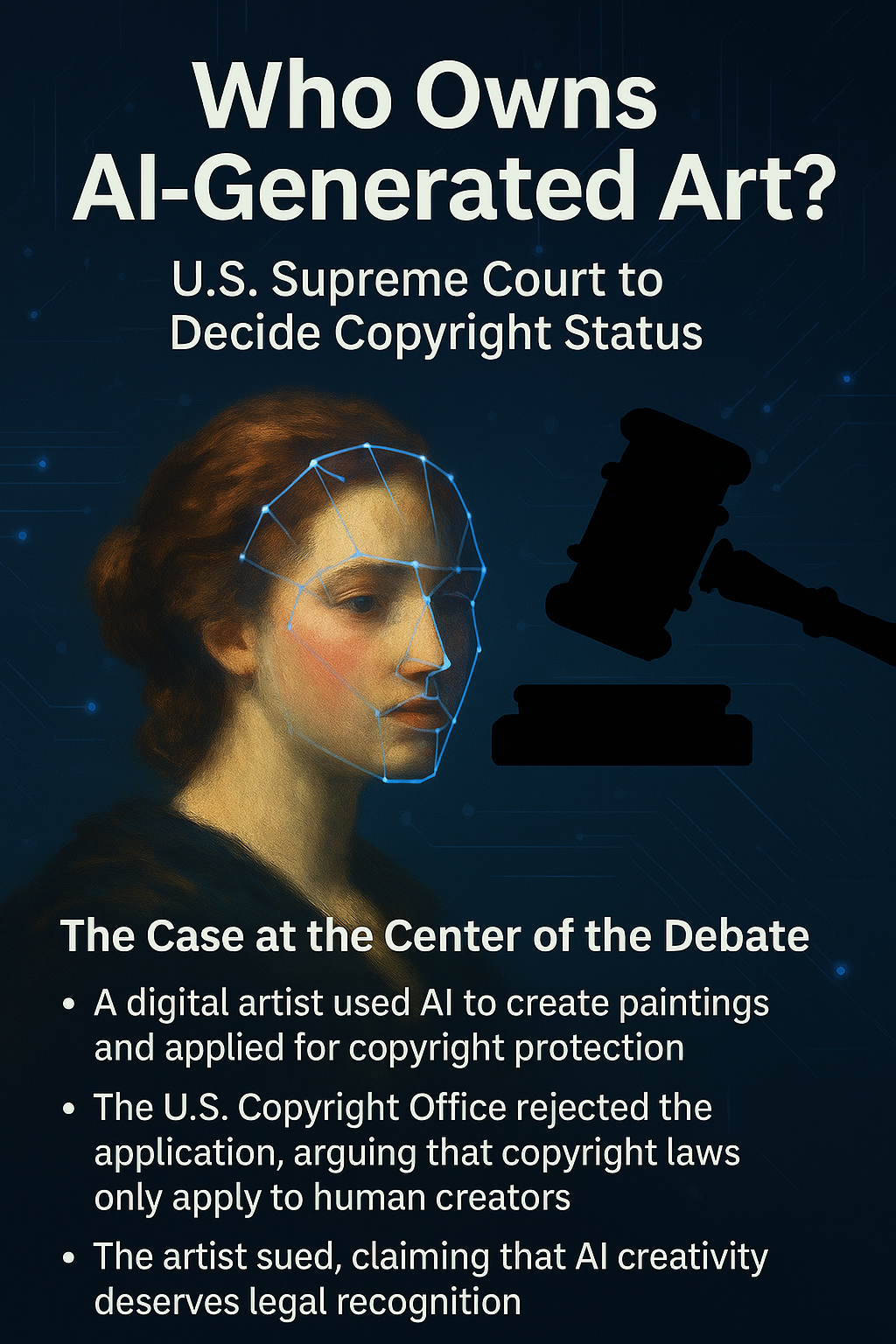
Who owns music created with AI assistance — developer, user, or platform?
2. Licensing Complexity
Multiple copyright holders must be compensated.
3. Algorithm Transparency
AI recommendations may affect royalties and artist exposure.
4. Copyright Enforcement
Platforms must detect infringing content automatically.
5. Fair Use and Transformative Works
AI remixing and sampling raise legal challenges.
4. Important Case Laws
Below are detailed explanations of major cases relevant to AI-assisted music streaming and digital music IP law.
Case 1: A&M Records Inc v Napster Inc (2001)
Facts:
Napster operated a peer-to-peer file-sharing platform allowing users to share copyrighted music without authorization.
Legal Issue:
Whether a digital platform facilitating music sharing could be liable for copyright infringement.
Judgment:
Court held Napster liable for:
Contributory infringement
Vicarious infringement
Importance:
Established liability of online platforms.
Influenced modern streaming services to implement licensing and content control mechanisms.
Basis for AI-powered content monitoring systems.
Case 2: MGM Studios Inc v Grokster Ltd (2005)
Facts:
Grokster provided software enabling file sharing of copyrighted content.
Issue:
Whether distributors of technology enabling infringement could be liable.
Judgment:
Court ruled companies liable if they induce infringement.
Impact:
Streaming platforms must actively prevent infringement.
Encouraged development of AI-based copyright detection systems.
Case 3: Viacom International Inc v YouTube Inc
Facts:
Viacom alleged YouTube hosted copyrighted content without permission.
Issue:
Platform liability and safe harbor protection.
Judgment:
Court recognized DMCA safe harbor if platform removes infringing content upon notice.
Relevance:
AI-assisted detection systems help platforms maintain compliance.
Highlights balance between automation and legal responsibility.
Case 4: Authors Guild v Google Inc (Google Books Case)
Facts:
Google used automated systems to scan books and create searchable databases.
Issue:
Whether automated content analysis violated copyright.
Judgment:
Court held scanning was fair use because it was transformative.
Application to AI Music Streaming:
AI analysis of music metadata or audio features may be legal if transformative.
Supports use of machine learning for recommendation systems.
Case 5: Bridgeport Music Inc v Dimension Films (2005)
Facts:
Unauthorized sampling of musical recording used in film soundtrack.
Judgment:
Court ruled that even small digital sampling requires licensing.
Importance:
AI remixing or sampling tools must ensure proper licensing.
Reinforces strict copyright protection in digital music.
Case 6: Capitol Records LLC v ReDigi Inc (2018)
Facts:
ReDigi created a marketplace for resale of digital music files.
Issue:
Whether digital resale violates copyright reproduction rights.
Judgment:
Court ruled digital resale infringed copyright because new copies were created.
Impact:
Influences streaming ownership models.
Shows legal limits of digital music distribution.
Case 7: Oracle America Inc v Google LLC (Software Copyright Principles)
Facts:
Concerned software code reuse and copyright protection.
Importance:
Though not music-specific, case impacts:
AI software used in streaming platforms.
Fair use considerations for software architecture.
5. Role of AI in Copyright Enforcement
AI technologies used by streaming platforms include:
Audio fingerprinting
Content ID systems
Automated takedown mechanisms
Royalty tracking and distribution
These tools help reduce infringement risk and ensure compliance with copyright law.
6. Challenges in AI-Assisted Music Streaming IP
Determining ownership of AI-generated music.
Fair compensation for artists.
Algorithmic bias affecting visibility.
Global licensing complexities.
Data privacy and user profiling.
7. Future Trends
AI-generated music copyright reforms.
Increased regulation of algorithm transparency.
Blockchain-based royalty tracking.
Smart contracts for licensing.
Expansion of automated rights management.
Conclusion
IPR in AI-assisted music streaming platforms involves complex interactions between copyright law, software patents, and AI technology. Landmark cases such as A&M Records v Napster, MGM v Grokster, Viacom v YouTube, and Bridgeport Music v Dimension Films have shaped legal standards concerning platform liability, digital copyright enforcement, and automated content monitoring. As AI continues to transform music discovery and distribution, legal systems must balance innovation, creator rights, and technological advancement.
RELATED Blog



comments