



IPR In AI-Assisted Educational Platforms Ip.
IPR IN AI-ASSISTED EDUCATIONAL PLATFORMS
1. Introduction
AI-assisted educational platforms use machine learning algorithms, natural language processing, adaptive analytics, recommendation engines, and automated content generation to deliver personalized learning. Examples include AI tutors, automated grading systems, adaptive learning dashboards, AI-generated lecture notes, and predictive student assessment tools.
These platforms raise complex intellectual property (IP) questions, such as:
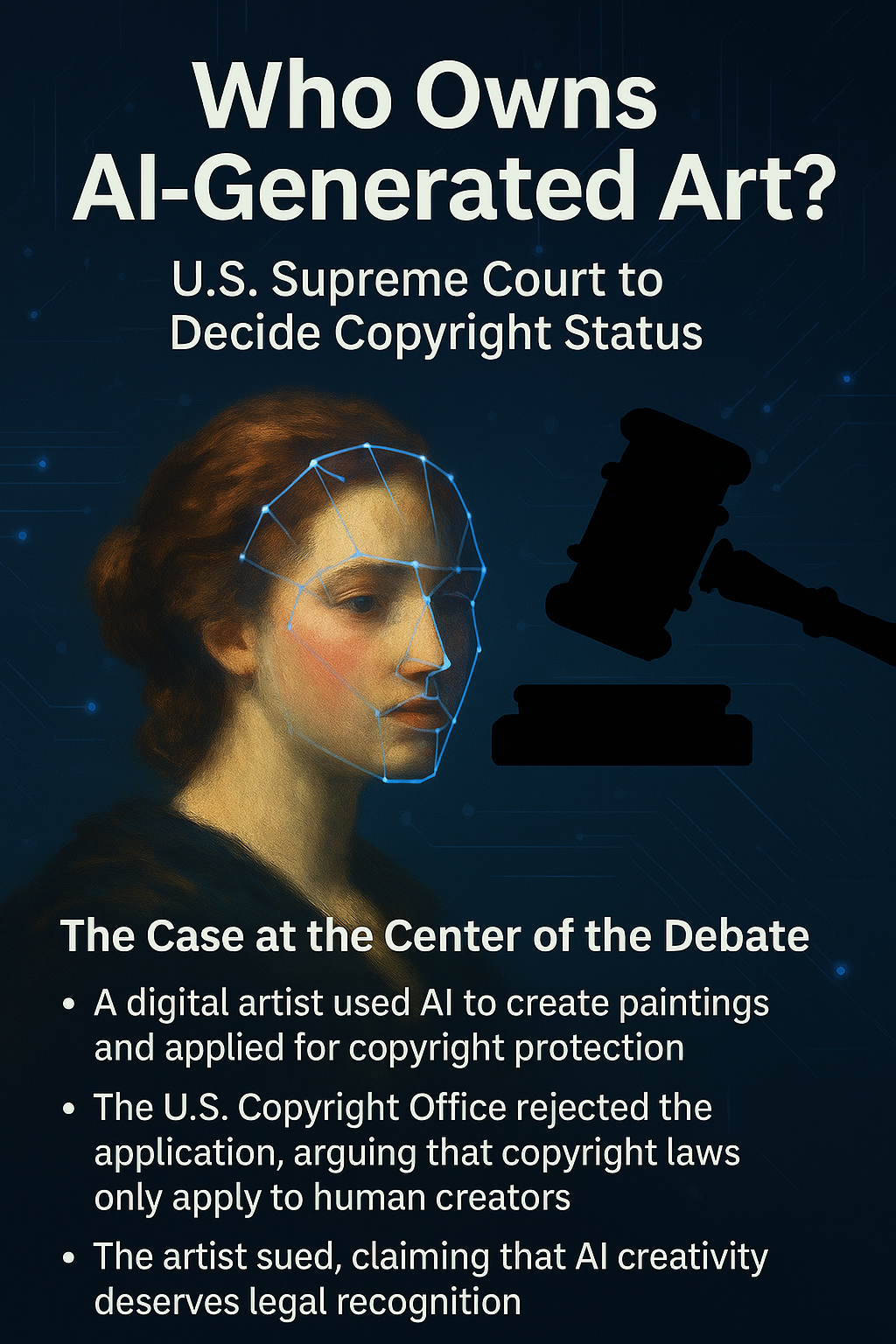
Who owns AI-generated educational content?
Whether AI algorithms used in education are patentable?
How copyright applies to training data and learning materials?
Protection of proprietary datasets and models as trade secrets
Infringement risks from AI-generated outputs
2. Types of IP Involved in AI-Assisted Educational Platforms
(a) Copyright
Educational content (videos, lectures, quizzes, notes)
AI-generated learning materials
Software code and user interfaces
Databases of student content and assessments
(b) Patents
Adaptive learning algorithms
Automated assessment and grading systems
Recommendation engines for curriculum personalization
AI-based learning analytics models
(c) Trade Secrets
Proprietary training datasets
Model weights and architectures
Personalized learning analytics logic
Pedagogical optimization methods
(d) Trademarks
Platform names, logos, AI tutor branding
Course and certification brand identity
3. Key IP Challenges in AI-Assisted Education
Authorship of AI-Generated Educational Content
Use of Copyrighted Material for AI Training
Patent Eligibility of AI Learning Systems
Ownership of Student-Generated Data
Trade Secret Protection of AI Models
4. Case Laws Related to AI-Assisted Educational Platforms (Detailed)
CASE 1: Eastern Book Company v. D.B. Modak (India)
Facts:
Eastern Book Company (EBC) published law reports with headnotes and editorial enhancements. The issue was whether these additions were copyrightable.
Legal Issue:
Whether value-added content created through intellectual effort qualifies for copyright protection.
Relevance to AI-Educational Platforms:
AI-generated summaries, explanations, and adaptive notes often rely on existing educational content. The question is whether AI-produced learning materials qualify for copyright.
Judgment:
The Supreme Court held that originality requires minimal creativity and intellectual effort, not mere mechanical reproduction.
Application to AI Platforms:
Purely automated AI-generated educational content may lack human creativity
Human-guided AI outputs (teacher-supervised, edited content) can qualify
Platforms must integrate human intellectual contribution to claim copyright
Principle Established:
AI educational content must reflect human intellectual intervention to gain copyright protection.
CASE 2: Cambridge University Press v. Patton (USA – Georgia State University case)
Facts:
Universities distributed digital excerpts of textbooks through online learning platforms without permission.
Legal Issue:
Whether digital educational dissemination qualifies as fair use.
Relevance to AI Platforms:
AI platforms train models on textbooks, articles, and course materials, often stored digitally.
Judgment:
The court emphasized purpose, amount used, and market impact in fair use analysis.
Application to AI-Education:
AI training on copyrighted textbooks without authorization may infringe
Commercial EdTech platforms face higher scrutiny
Fair use is limited when AI substitutes paid educational materials
Principle Established:
Educational purpose alone does not guarantee fair use for AI-based platforms.
CASE 3: Authors Guild v. Google (Google Books case)
Facts:
Google digitized millions of books to create a searchable database.
Legal Issue:
Whether mass digitization for indexing purposes constitutes copyright infringement.
Relevance to AI-Educational Platforms:
AI systems often scan and analyze massive educational datasets for personalized learning.
Judgment:
The court held that transformative use for search and analysis qualifies as fair use.
Application to AI Education:
Training AI models for learning analytics may be transformative
Providing verbatim AI-generated educational content from copyrighted works is risky
Search, classification, and recommendation functions are safer legally
Principle Established:
Transformative analytical use of educational content may be permitted, but content reproduction is restricted.
CASE 4: Oracle America Inc. v. Google LLC
Facts:
Google used Java APIs in Android without permission.
Legal Issue:
Whether software interfaces and functional code are copyrightable.
Relevance to AI-Education Platforms:
AI educational platforms rely heavily on APIs, learning management system integrations, and interoperable software modules.
Judgment:
The Supreme Court ruled that Google's use was fair use due to transformative purpose.
Application to AI-EdTech:
Use of educational software APIs may be lawful if transformative
Copying proprietary learning algorithms is not protected
AI platforms must design original pedagogical logic
Principle Established:
Functional elements used for innovation in educational software may qualify for fair use.
CASE 5: University of London Press v. University Tutorial Press (UK)
Facts:
The dispute involved examination papers created by university professors.
Legal Issue:
Whether examination questions qualify as original literary works.
Relevance to AI-Assisted Education:
AI platforms generate quizzes, tests, and automated assessments.
Judgment:
The court held that examination papers are original works requiring skill and judgment.
Application to AI Platforms:
Human-designed assessment frameworks are protected
Fully autonomous AI-generated exams may lack authorship
Ownership lies with institutions or educators directing AI systems
Principle Established:
Educational assessments are copyrightable when human intellectual effort is present.
CASE 6: A&M Records v. Napster (Indirect Relevance)
Facts:
Napster enabled unauthorized sharing of copyrighted works.
Legal Issue:
Liability of platform providers for user-generated infringement.
Relevance to AI Education Platforms:
Students upload content, assignments, and copyrighted material into AI learning systems.
Judgment:
Platforms facilitating infringement can be held liable.
Application:
AI educational platforms must implement content monitoring
Automated plagiarism detection is essential
Safe harbor depends on proactive compliance mechanisms
Principle Established:
Platforms are responsible if they knowingly enable copyright infringement.
CASE 7: Feist Publications v. Rural Telephone Service
Facts:
Whether factual compilations are copyrightable.
Legal Issue:
Originality in databases.
Relevance to AI Education:
AI platforms rely on student performance databases and learning analytics.
Judgment:
Facts are not copyrightable, but creative selection and arrangement are.
Application:
Raw student data is not protected
Curated learning analytics dashboards can be protected
Proprietary educational datasets may be protected as trade secrets
Principle Established:
Databases require creative organization for copyright protection.
5. Patent Protection for AI-Educational Platforms
Patentable Elements:
Adaptive learning algorithms
AI-based grading mechanisms
Predictive dropout analysis models
Non-Patentable Elements:
Abstract teaching methods
Pure mathematical models
Generic AI implementation without technical effect
Courts emphasize technical contribution and practical application, especially when AI improves educational outcomes measurably.
6. Trade Secret Protection in AI-Education
AI-assisted platforms often rely on:
Proprietary training datasets
Personalized learning pathways
Student behavior analytics
Courts protect these if:
Reasonable secrecy measures exist
Data is commercially valuable
Access is contractually restricted
7. Conclusion
AI-assisted educational platforms sit at the intersection of education, technology, and IP law. Courts consistently emphasize:
Human intellectual contribution in authorship
Transformative use over reproduction
Technical innovation for patent eligibility
Responsible platform governance
As AI becomes central to education, IP law is evolving to balance innovation, access to education, and creator rights.
RELATED Blog





comments