



Ipr In AI-Assisted Autonomous Delivery Robots
IPR in AI-Assisted Autonomous Delivery Robots
1. What Are AI-Assisted Autonomous Delivery Robots?
These are robots capable of navigating, picking up, and delivering items without direct human control. Examples:
Food delivery robots (e.g., Starship, Nuro)
Parcel delivery robots (e.g., Amazon Scout)
Last-mile delivery drones
They combine:
Hardware: sensors, wheels, robotic arms, chassis
Software: navigation, routing, scheduling
AI algorithms: path planning, obstacle avoidance, object recognition
Communication systems: 5G, GPS, IoT
Because of this integration, multiple IP rights can apply.
2. Types of IPR Involved
1. Patents
Protect robot design, autonomous navigation methods, AI algorithms, object handling systems
Example: Path optimization algorithms or obstacle detection systems
Critical challenge: Can AI invent new delivery techniques?
2. Copyright
Protects software code, training datasets, AI-generated reports/logs, digital mapping interfaces
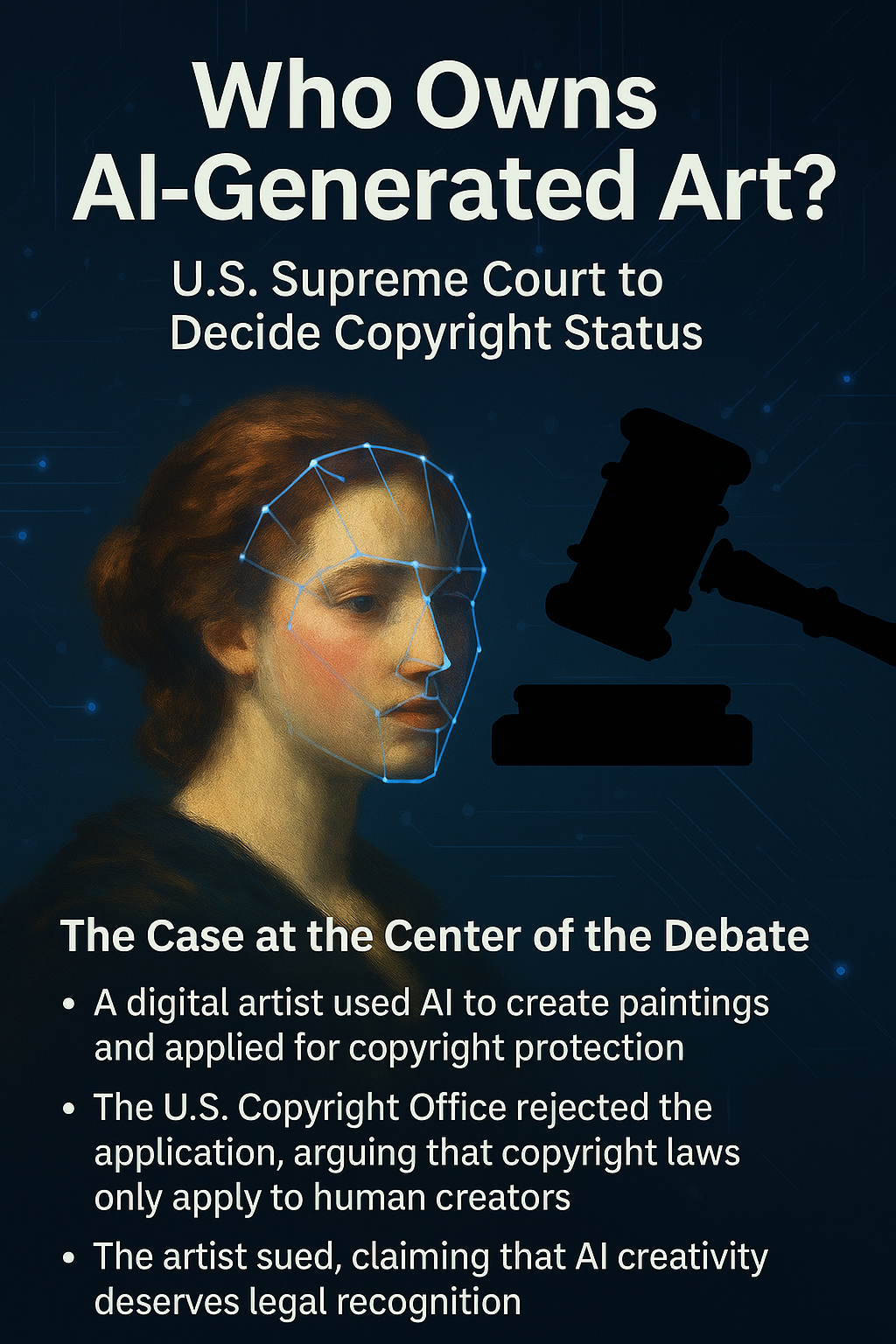
AI-generated content raises authorship issues (human vs. machine)
3. Trade Secrets
Protect proprietary AI models, sensor fusion algorithms, and operational datasets
Advantage: No public disclosure, unlike patents
4. Trademarks
Protect robot branding, delivery service logos, and marketing identities
5. Design Rights
Protect robot shape, configuration, and aesthetic elements
6. Data Rights & Privacy
Robots collect delivery addresses, customer preferences, traffic patterns
Improper use may violate IP and data protection laws
Important Case Laws and Their Relevance
1. DABUS AI Patent Cases (Stephen Thaler v. Patent Offices)
Jurisdictions: USA, UK, EU, Australia
Facts:
DABUS AI system independently created inventions, including delivery-related robotic systems. Applications were filed listing the AI as the inventor.
Judgment:
Patent offices rejected all applications
Only natural persons can be inventors
Relevance:
Autonomous delivery robots cannot be recognized as inventors
Human designers must be named
AI can assist but legal ownership rests with humans or companies
2. Naruto v. Slater (Monkey Selfie Case)
Jurisdiction: USA
Facts:
A monkey took photographs with a photographer’s camera.
Judgment:
Copyright requires human authorship
Non-human entities cannot own copyright
Relevance:
Software or content autonomously generated by delivery robots may not have copyright protection
Ownership of robot-generated mapping logs or delivery optimization reports must vest in humans
3. Feist Publications v. Rural Telephone Service
Jurisdiction: USA
Facts:
Telephone directory compilation claimed copyright.
Judgment:
Facts themselves are not copyrightable
Only original selection/arrangement is protected
Relevance:
Raw delivery data (customer addresses, delivery logs) cannot be copyrighted
Curated routing databases or optimized path selections could qualify if original human selection exists
4. SAS Institute v. World Programming Ltd.
Jurisdiction: EU
Facts:
World Programming copied functionality of SAS software without copying source code.
Judgment:
Software functionality cannot be copyrighted
Source code and expression are protected
Relevance:
Competitors cannot copy proprietary AI code of delivery robots
But they may create similar functionality independently
5. Google LLC v. Oracle America Inc.
Jurisdiction: USA
Facts:
Google copied Java API declarations to develop Android.
Judgment:
Copying was allowed under fair use for innovation and interoperability
Relevance:
Delivery robots using common APIs for navigation or fleet management could be permissible under fair use
Promotes inter-company collaboration in delivery AI
6. R.G. Anand v. Delux Films
Jurisdiction: India
Facts:
A play was allegedly copied into a film.
Judgment:
Ideas are not protected; expression is
Protects only specific expression of ideas
Relevance:
Delivery methods, routing strategies, and logistical ideas cannot be monopolized
Only the robot’s unique hardware/software configuration is protectable
7. Eastman Kodak v. Image Technical Services
Jurisdiction: USA
Facts:
Kodak tried to prevent third parties from servicing its machines.
Judgment:
Limited IP control cannot prevent interoperability and service innovation
Relevance:
Third-party software or AI algorithms for autonomous delivery robots can interoperate with existing hardware
Encourages competitive innovation
Key Legal Challenges
AI Inventorship: Robots cannot hold patents
Ownership of AI-generated content: Logs, optimization data, or maps
Competition vs IP protection: Preventing abuse of patents while promoting interoperability
Data Privacy: Robots collect sensitive delivery and customer data
Trade Secret Enforcement: Hard to protect AI algorithms if reverse-engineered
Conclusion
Autonomous delivery robots involve complex IPR layers: patents, copyright, trade secrets, trademarks, and design rights.
Courts consistently rule AI is not a legal inventor or author.
Ownership, licensing, and human involvement are key to securing IP rights.
Future reforms may allow AI-assisted IP, but today, humans or companies are the legal rights holders.
RELATED Blog



comments