



Emergency Constitutional Derogations.
Emergency Constitutional Derogations
Explanation:
Emergency constitutional derogations refer to the temporary suspension or modification of certain fundamental rights or constitutional provisions during times of crisis, such as war, external aggression, armed rebellion, or internal disturbances. The Constitution usually provides for a framework that allows the state to act decisively, but such powers are strictly limited in scope, duration, and oversight to prevent abuse. Key principles include:
- Legality: Any derogation must have a clear constitutional or statutory basis.
- Proportionality: Measures must be appropriate to the severity of the emergency.
- Judicial Review: Courts retain the power to review the validity of emergency measures.
- Fundamental Rights: Certain rights, like the right to life and equality, may continue to be protected even during emergencies.
- Separation of Powers: Legislative and executive powers can expand temporarily, but the judiciary may still oversee procedural fairness.
Emergency provisions can be classified under three broad categories in the Indian Constitution:
- National Emergency (Article 352) – For war, external aggression, or armed rebellion.
- State Emergency (President’s Rule under Article 356) – When a state government cannot function according to the Constitution.
- Financial Emergency (Article 360) – For economic instability affecting fiscal sovereignty.
Key Case Laws:
- A.K. Gopalan v. State of Madras (1950) – Early case on preventive detention during emergency; clarified limits on liberty under emergency provisions.
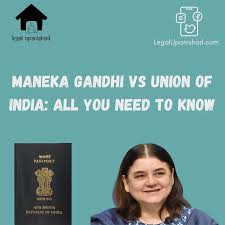
- Maneka Gandhi v. Union of India (1978) – Even in emergencies, procedural fairness and due process must be respected.
- Indira Gandhi v. Raj Narain (1975) – Supreme Court reviewed government powers during National Emergency; underscored limits on arbitrary action.
- ADM Jabalpur v. Shivkant Shukla (1976) – Controversial case on suspension of habeas corpus; later discussed as a cautionary precedent for judicial oversight.
- Minerva Mills v. Union of India (1980) – Reaffirmed that emergency powers cannot abrogate basic constitutional structure.
- S.R. Bommai v. Union of India (1994) – Reinforced that state emergency powers (Article 356) are subject to judicial review to prevent misuse.
- Kesavananda Bharati v. State of Kerala (1973) – Basic structure doctrine ensures that emergency powers cannot destroy fundamental features of the Constitution.
- R.C. Cooper v. Union of India (1970) – Demonstrated limits on emergency powers when nationalization affected property rights.
Summary:
Emergency constitutional derogations are designed to allow the state to act decisively during crises, but Indian jurisprudence has consistently emphasized judicial review, proportionality, and protection of the basic structure. While certain rights may be suspended or restricted, the principle of constitutionalism remains intact, preventing arbitrary or unchecked authority.

RELATED Blog







comments