



Criminal Procedure Code at Ghana
Ghana's criminal procedure is governed by the Criminal and Other Offences Procedure Act, 1960 (Act 30), often referred to as the Criminal Procedure Code (CPC). This law outlines the rules and processes that govern criminal investigations, trials, and appeals in Ghana. The Criminal Procedure Code serves as the primary framework for how criminal cases are handled in the country.
Key Features of the Criminal Procedure Code of Ghana:
General Overview:
The Criminal Procedure Code (CPC) is divided into various sections that cover the entire process of criminal justice from arrest through to trial and sentencing.
It applies to all criminal offenses in Ghana, except where specific laws provide otherwise.
The law sets the procedures for the prosecution of criminal offenses, the rights of the accused, and the duties of law enforcement officials, prosecutors, and judges.
Investigation and Arrest:
The police or other authorized officers have the power to arrest individuals suspected of committing crimes.
Arrests can be made either with a warrant or without one, depending on the circumstances (e.g., in the case of a crime being committed in the officer's presence).
Once arrested, the suspect must be informed of the reasons for the arrest and their rights (such as the right to remain silent).
The police are required to carry out investigations, and in some cases, may seek permission from a magistrate or judge to perform certain investigative actions, such as searches or surveillance.
Prosecution:
Prosecution of criminal cases is handled by the Attorney General's Department, which is responsible for bringing charges against individuals.
In certain cases, private individuals can also initiate criminal proceedings through a private prosecution (especially for minor offenses or in the case of a victim's interest in seeking justice).
Pre-trial Procedures:
The Committal Proceedings are an essential part of the pre-trial process, especially for serious offenses. A magistrate or district court holds a preliminary hearing to determine if there is sufficient evidence to send the case to a higher court for trial.
In cases where the offense is a felony, the matter is referred to the High Court for trial.
A bail hearing may also take place if the accused seeks to be released on bail before trial.
Trial:
Criminal trials are typically heard in the High Court or Circuit Courts for serious offenses, and in the District Courts for less serious offenses.
The trial is open to the public, and the accused is presumed innocent until proven guilty.
Rights of the Accused: The accused has the right to legal representation, the right to remain silent, and the right to present a defense. In serious cases, the accused may be entitled to a jury trial (in cases tried before the High Court).
The prosecution has the burden of proving the guilt of the accused beyond a reasonable doubt.
The Role of the Magistrate and Judge:
A magistrate typically handles lower-level offenses, while judges in the High Court handle more serious offenses.
The Chief Justice oversees the judicial system, and judges are expected to act impartially and in accordance with the law.
Judges or magistrates can also decide whether to grant bail, issue warrants, and impose sentences.
Sentencing:
Once the trial is complete, and the accused is found guilty, the judge or magistrate will determine an appropriate sentence. Sentences can include fines, imprisonment, or, in certain cases, the death penalty (although the death penalty is not regularly carried out in Ghana).
The Criminal Procedure Code allows for sentencing options that include probation, imprisonment, or community service, depending on the nature of the offense.
Appeals:
The accused has the right to appeal a conviction or sentence to a higher court if they believe there has been an error in the legal proceedings or in the application of the law.
Appeals from the District Court can be made to the High Court, and appeals from the High Court can be taken to the Court of Appeal.
The Supreme Court is the highest court and has jurisdiction to hear certain types of appeals, particularly on matters of constitutional significance.
Rights of Victims and Witnesses:
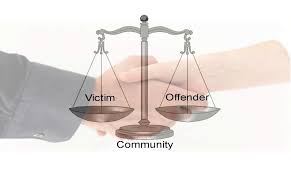
Victims of crime have the right to seek restitution or compensation, especially if they have suffered harm due to the crime.
Victims and witnesses are protected, especially in cases of sexual violence or other serious offenses, to prevent intimidation or harm during the trial process.
Reforms and Modernization:
The criminal justice system in Ghana has undergone various reforms, particularly in recent years, to ensure that it aligns with international human rights standards.
Reforms have included the establishment of the Judicial Service of Ghana, which aims to make the court system more efficient and accessible, and the introduction of alternative dispute resolution mechanisms to resolve cases outside of court.
The Criminal Procedure Code is an essential piece of legislation for ensuring that criminal trials in Ghana are conducted fairly, that justice is served, and that the rights of both the accused and the victims are upheld.
For further reading or to access specific legal provisions, the Criminal Procedure Code can be found through legal databases or the Ghana Legal Information Institute (GhanaLII).
RELATED Blog







comments