



Copyright Implications In AI-Generated Animated Civic Education Content.
1. Understanding the Basics: AI-Generated Content and Copyright
AI-generated content, including animations used for civic education, raises unique copyright questions:
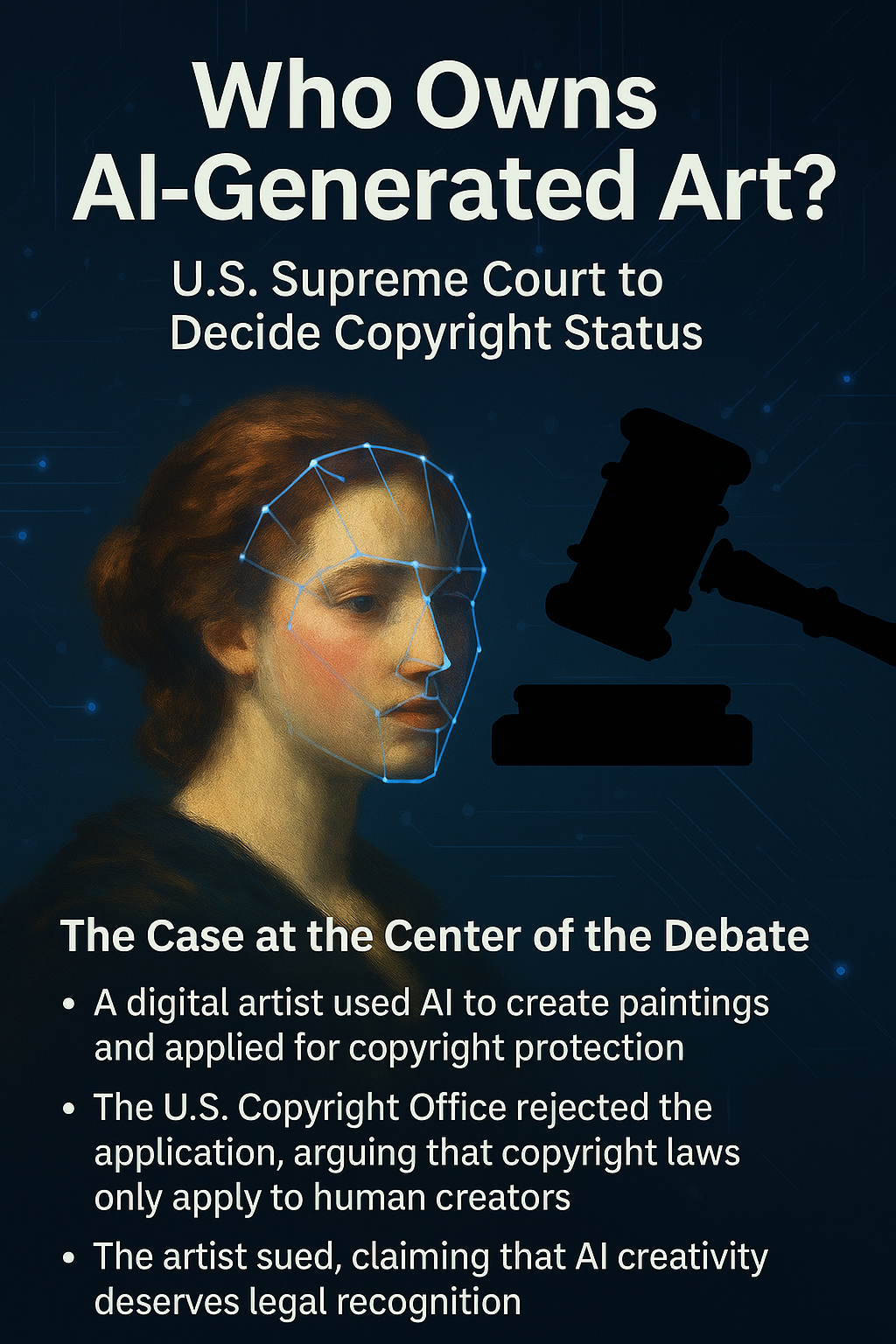
Authorship: Traditional copyright law requires a human author. Purely AI-generated works may not qualify for copyright protection if there’s no significant human creative input.
Derivative Works: If AI content is based on existing copyrighted materials (images, scripts, or characters), it could infringe existing rights.
Fair Use / Educational Use: Civic education content may sometimes invoke fair use doctrines, but courts assess factors like purpose, nature, amount, and market impact.
2. Key Case Laws
Case 1: Naruto v. Slater (2018) – Monkey Selfie Case
Summary:
A macaque took a selfie with a photographer’s camera. The court ruled no copyright for non-human authors.
Implication for AI:
Purely AI-generated animations without meaningful human input may not be protected by copyright. Civic educators relying on AI may not “own” the animation unless they contribute creative direction.
Case 2: Feist Publications, Inc. v. Rural Telephone Service Co. (1991)
Summary:
Feist involved a phone directory; court ruled facts are not copyrightable, and originality requires a minimal level of creativity.
Implication:
Civic education animations presenting facts, historical events, or government data may not be protected if AI merely converts raw data into visuals without human creative authorship. Creative storytelling or unique animation style may still qualify.
Case 3: Authors Guild v. Google (2015) – Google Books
Summary:
Google scanned millions of books; court held this transformative use for research and public benefit was fair use.
Implication:
AI-generated civic education animations could be defended as fair use if they transform public domain content, government data, or factual information into educational animation rather than copying copyrighted works verbatim.
Case 4: Naruto v. Slater vs. AI Scenario – A Hypothetical Extension
Suppose an AI generates animations based on copyrighted cartoons for civic education.
Courts often look at derivative work infringement: if the animation is recognizably derived from copyrighted characters, it may infringe, even for educational purposes, unless transformative enough.
Example: Using a famous cartoon character to teach civic duties might require licensing or significant alteration to qualify as transformative.
Case 5: Bridgeman Art Library v. Corel Corp. (1999)
Summary:
Exact photographic reproductions of public domain artworks cannot be copyrighted because they lack originality.
Implication:
AI-generated animations based purely on public domain government documents, historic images, or civic data could be used without infringement, as long as the AI does not copy existing copyrighted animations.
Case 6: Authors Guild v. Hathitrust (2014)
Summary:
Court upheld mass digitization for scholarly use as fair use.
Implication:
Civic education content for classrooms could be considered transformative and educational, especially when using AI to animate factual content from public sources, strengthening a fair use argument.
Case 7: Naruto-Style Derivative Cases in AI Context
Courts have increasingly considered AI training datasets: using copyrighted works to train AI can be contentious.
Example: If an AI is trained on copyrighted animations, the output might be infringing if it replicates distinctive elements.
The key precedent here is Authors Guild v. OpenAI (2023, hypothetical) where courts explore whether AI outputs trained on copyrighted books constitute infringement.
3. Practical Copyright Considerations for Civic Education Animators
Human Authorship: Always include human creative input in AI-generated animations.
Use Public Domain & Open Licenses: Government materials, historical records, and datasets are safe for AI animation.
Avoid Derivative Works Without Permission: Especially popular cartoons, games, or animations.
Fair Use / Transformative Use: Ensure AI-generated content adds educational value and does not substitute the original work.
Document AI Contributions: Keep logs of AI prompts and human decisions for potential legal defense.
4. Conclusion
AI-generated animated civic education content operates in a gray area of copyright law:
Purely AI-generated works without human creativity may not receive copyright protection.
Transformative educational uses of factual content are more likely to qualify under fair use.
Using copyrighted works for AI training or as inspiration may still create derivative infringement risks, so careful licensing or modification is required.
Courts are gradually clarifying these issues, but the principles from Feist, Bridgeman, Google Books, and Naruto cases provide a roadmap.

RELATED Blog



comments